
Top Passenger Car Tire Models for Taxi Companies: Ranking by Load Index and Urban Durability
Taxi tires should be chosen by load index first and speed rating last. A taxi runs a stop-start urban cycle, carries a near-full passenger load for most of its working day, and covers annual mileage far above private-use averages. In that duty cycle the load index and the stated urban-road positioning of a model matter more than a top-speed figure that the vehicle will never use. This article ranks seven passenger car tire model families supplied by the WIDEWAY, EVERLAND and V-RICH brands, ordered by their published load index and by explicit urban-road suitability, using only the technical specifications and material facts published for those ranges.
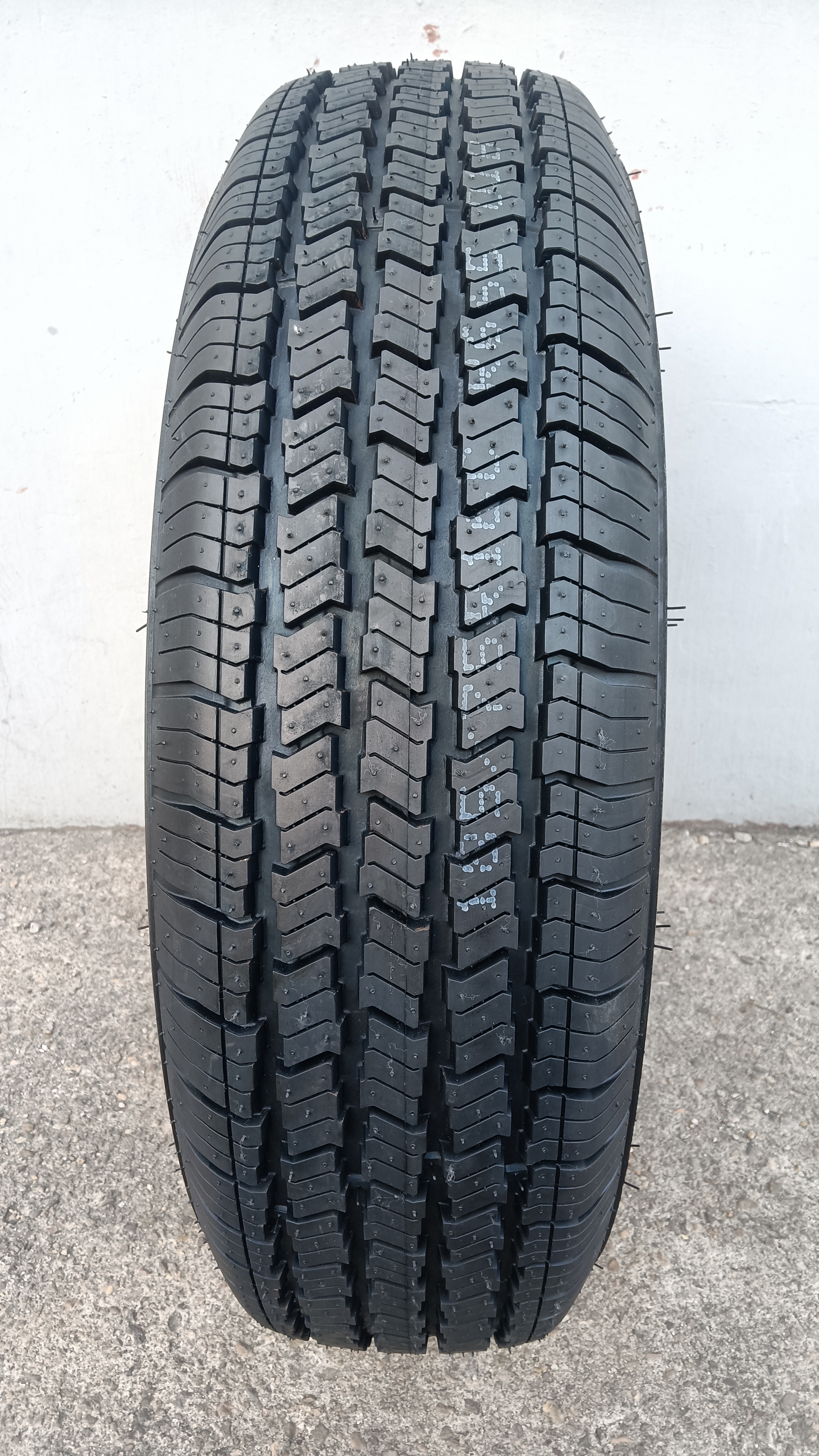
Cover: VANGUARD 185/75R16C, a 104/102 load index passenger car tire listed for urban, commercial van and all-season use.
Why Load Index and Urban Positioning Decide Taxi Tire Choice
Load index is the numeric code moulded on a tire sidewall that corresponds to the maximum mass the tire is designed to carry at its rated inflation pressure. It is a separate specification from speed rating, which describes sustained speed capability. For a taxi, the load figure is the binding constraint: a vehicle that carries three or four passengers plus luggage for ten hours a day spends far more time near its rated axle load than a private car that carries one person on a commute.
The passenger car tire ranges covered in this ranking are published with load indices of 122/118, 109/107, 109, 106/104, 104/102, 103, 102, 101, 99, 94, 91, 88 and 86. Where two figures appear, such as 122/118 or 106/104, the specification describes two fitment configurations. Buyers should confirm which figure applies to the axle set-up on their vehicles before committing to an annual tire contract, because the difference between the two numbers changes the legal load capacity of the fitment.
Three failure patterns dominate urban taxi duty: heat accumulation from repeated braking and acceleration, sidewall and shoulder damage from kerbs and potholes, and load-related deformation when a vehicle is run near maximum occupancy for long periods. All three are influenced by load index headroom and by the reinforcing materials used in the carcass, which is why the material lists are read alongside the load figures in this shortlist.
The companion problem is scenario mismatch. Tires positioned for one condition are regularly bought for another. The ranges ranked below carry explicit scenario labels such as Urban Road Passenger Car Tire, High-speed stability Passenger Car Tire, Commercial Van Passenger Car Tire and Comfortable and noiseless Passenger Car Tire. The same supplier catalogue also contains winter and snow positions intended for different operating conditions. For taxi duty, the urban and comfort labels are the ones that match the route profile.
Definitions used in this ranking
- Load index — the published maximum load code for the range, as listed in the manufacturer specification data.
- Urban durability — the combination of the Urban Road Passenger Car Tire scenario label with the reinforcing materials listed for the range: steel cord, polyester cord fabric and nylon cord fabric.
- Stated scenario — the operating conditions the manufacturer publishes for the range, not an independent test result.
Industry Background: Where Taxi Tire Demand Is Heading
The commercial context for a taxi tire decision is a large replacement market with a clear technological direction. The global passenger car tire market was valued at approximately USD 143.06 billion in 2024, and the passenger car segment accounted for a 32.6% revenue share of the total tire market (Grand View Research). Published estimates differ by scope — Market Research Future places the figure at approximately USD 197.71 billion — so procurement teams comparing market reports should confirm what each number includes before using it in an internal business case.
Supply availability is a second consideration. China's total tire exports in 2025 reached 9.65 million tonnes, a 3.6% increase year on year, with an export value of approximately RMB 167.7 billion, or roughly USD 23.1 billion (General Administration of Customs data reported by SunSirs). For importers and fleet buyers, that scale of export flow is what makes container-level ordering practical.
The third shift is electrification. The global electric vehicle tire market is projected to reach USD 337.20 billion by 2034, growing at a 28.1% CAGR from 2025, driven by requirements for high load capacity and low noise (Precedence Research). Taxi fleets are among the earliest commercial adopters of electric vehicles, which means load index and noise performance are now requested together rather than traded off against each other.
Regulation sets the floor for all of this. Passenger car tires must comply with UN Regulation No. 117 (ECE R117), which sets limits for rolling resistance, wet grip and external rolling noise and underpins mandatory labeling in the EU (UNECE). On the supply side, Shandong Wideway Tire Co., Ltd. operates a 1,000,000 sqm facility with an annual capacity of 23.4 million units and exports 70% of its production globally, according to an industry profile published by The National Law Review and EINPresswire; the company's own corporate data lists the same annual output, 5,000 employees and a 25-person R&D team.
The Shortlist: Seven Passenger Car Tire Models Ranked for Taxi Duty
The ranking order below applies four criteria in sequence: published load index of the range; stated construction materials (steel cord, polyester cord fabric, nylon cord fabric); stated road-scenario applicability, with Urban Road Passenger Car Tire weighted highest; and stated comfort or noise positioning. Commercial parameters — maximum pressure and section width — are used as tie-breakers and are shown in the comparison table.
Rank 17.00R16LT and 7.50R16LT — Load Index 122/118
The highest load index in this data set belongs to the 7.00R16LT and 7.50R16LT range. It is published with a maximum pressure of 770 KPA, a section width of 215 mm and a speed rating of L, and it carries the Commercial Van Passenger Car Tire, Urban Road Passenger Car Tire and High-speed stability Passenger Car Tire labels. Its material list includes steel cord, polyester cord fabric and nylon cord fabric alongside natural rubber, synthetic rubber, carbon black, precipitated silica and the standard vulcanizing and protective agents.
For a taxi operation this range fits vehicles that run loaded for most of the working day — van-based taxis, group taxis and urban shuttle services. The trade-off is deliberate: the L speed rating is lower than the R, H and W ratings used by the other ranges in this ranking, so this is a load-first family rather than a speed-first one. Fleets that need both high occupancy and motorway cruising should compare it against Rank 2 before deciding.
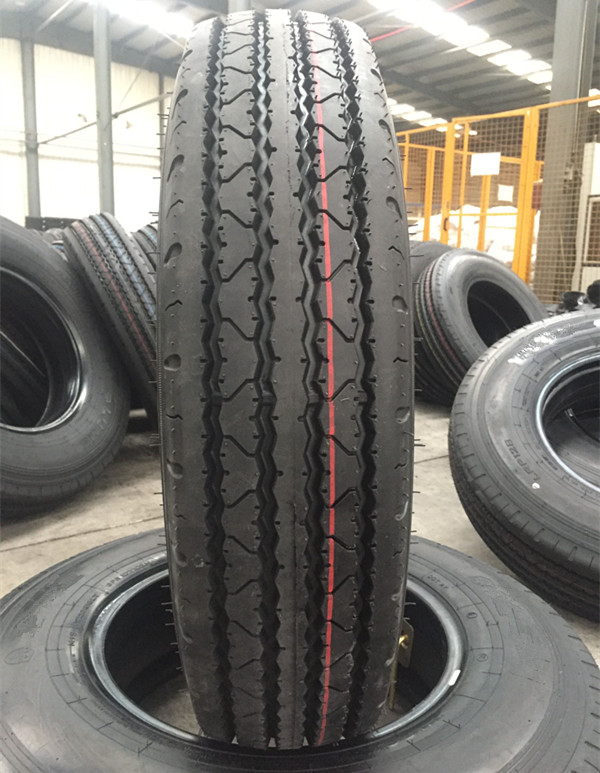
ECOWAY I — the pattern shown for the 7.00R16LT / 7.50R16LT range, listed with load index 122/118.
Rank 2195/70R15C, 225/70R15C and 215/65R16C — Load Index 109/107
This is the highest load index available in a 15-inch and 16-inch size set, and it is the second-highest in the shortlist overall. The range is published with a maximum pressure of 475 KPA — the highest figure among the 15-inch and 16-inch ranges ranked here — a section width of 223 mm and a speed rating of R. Its scenario labels cover Urban Road Passenger Car Tire, High-speed stability Passenger Car Tire, Comfortable and noiseless Passenger Car Tire and Winter and Snow Passenger Car Tire, and its material list follows the same steel cord, polyester cord fabric and nylon cord fabric construction.
For taxi fleets this is the most balanced option in the shortlist: near-top load capacity without giving up the R speed rating, in sizes that fit van-derived passenger vehicles. Operators in markets with cold winters get a stated winter and snow position from the same range.
Rank 3215/55ZR17 to 275/40ZR19 — Load Index 109, EV and Low-Noise Position
This is the only range in the data set explicitly labelled Comfortable and noiseless EV Passenger Car Tire. It is published with a load index of 109, a speed rating of W, a maximum pressure of 340 KPA and a section width of 265 mm, and it also carries the Urban Road Passenger Car Tire and High-speed stability Passenger Car Tire labels. Its sizes run from 215/55ZR17 to 275/40ZR19.
The relevance to taxi fleets is direct. As electric taxis enter service, load index and low noise become simultaneous requirements — the same pairing that the EV tire market data attributes to the segment's growth. The limitation is equally direct: with rim diameters of 17 to 19 inches, this range cannot replace the 13 to 16 inch sizes used on conventional sedan and van-based taxis. It is a fleet-electrification option, not a general replacement option.
Rank 4155R12C through 235/65R16C — Load Index 106/104, 25 Sizes
The broadest size coverage in the shortlist sits at a 106/104 load index, with a maximum pressure of 450 KPA, a section width of 198 mm and a speed rating of R. The range includes 155R12C, 185R14C, 195R14C, 195R15C, 195/70R15C, 205/70R15C, 215/70R15C, 215/65R16C, 225/65R16C and 235/65R16C, among others, and its scenario labels include Commercial Van Passenger Car Tire, Urban Road Passenger Car Tire, High-speed stability Passenger Car Tire, Comfortable and noiseless Passenger Car Tire and Safe and affordable family Passenger Car Tire.
Two details matter for fleet procurement. First, the material list of this range also includes white rubber compound, which is what supports white sidewall production for markets that request it. Second, because one range covers 25 sizes, a distributor can fill a mixed taxi fleet requirement from a single item family, which simplifies stock keeping.

ENERGYWAY I — the pattern shown for the 155R12C to 235/65R16C range, listed with load index 106/104.
Rank 5155R13C, 185R14C, 195R14C, 205/75R14C, 185R15C, 195R15C, 205/75R15C — Load Index 106/104
Seven sizes carry the same 106/104 load index as Rank 4, at a maximum pressure of 450 KPA, a section width of 196 mm and a speed rating of R, with Commercial Van Passenger Car Tire, Urban Road Passenger Car Tire and Comfortable and noiseless Passenger Car Tire labels. It ranks below Rank 4 only because its size coverage is narrower. Where the fleet operates 14-inch and 15-inch van-based vehicles — the 195R15C fitment in particular — this range is the more targeted choice.
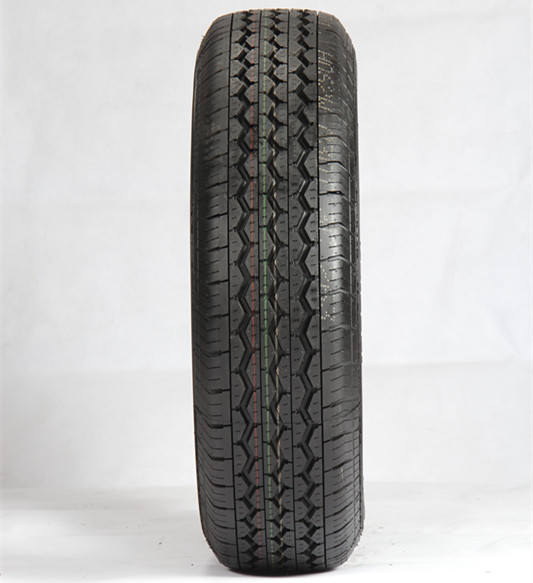
Energyway II 195R15C — a 15-inch size from the 106/104 load index van range.
Rank 6185R14LT, 195R14LT, 195R15LT — Load Index 106/104
This three-size light-truck-marked set repeats the 106/104 load index at 450 KPA and a 196 mm section width, with a Q speed rating and the same urban, commercial van and high-speed stability positioning. The LT marking indicates a reinforced construction intent; the practical difference for a taxi fleet is that these sizes are commonly specified on load-carrying passenger vehicles rather than on standard sedans.
Rank 7185/75R16C and 195/75R16C — Load Index 104/102, All-Season Position
The lowest load index in the shortlist, but the only 16-inch van range published with an All Season label. It is listed at 475 KPA, a section width of 184 mm and a speed rating of R. The narrow 184 mm section width suits vehicles with tighter wheel-arch clearance, and the 475 KPA maximum pressure matches the higher-pressure van fitments. For taxi fleets in markets that switch between wet and dry seasons rather than between summer and winter tires, this is the range whose stated positioning removes the seasonal changeover.
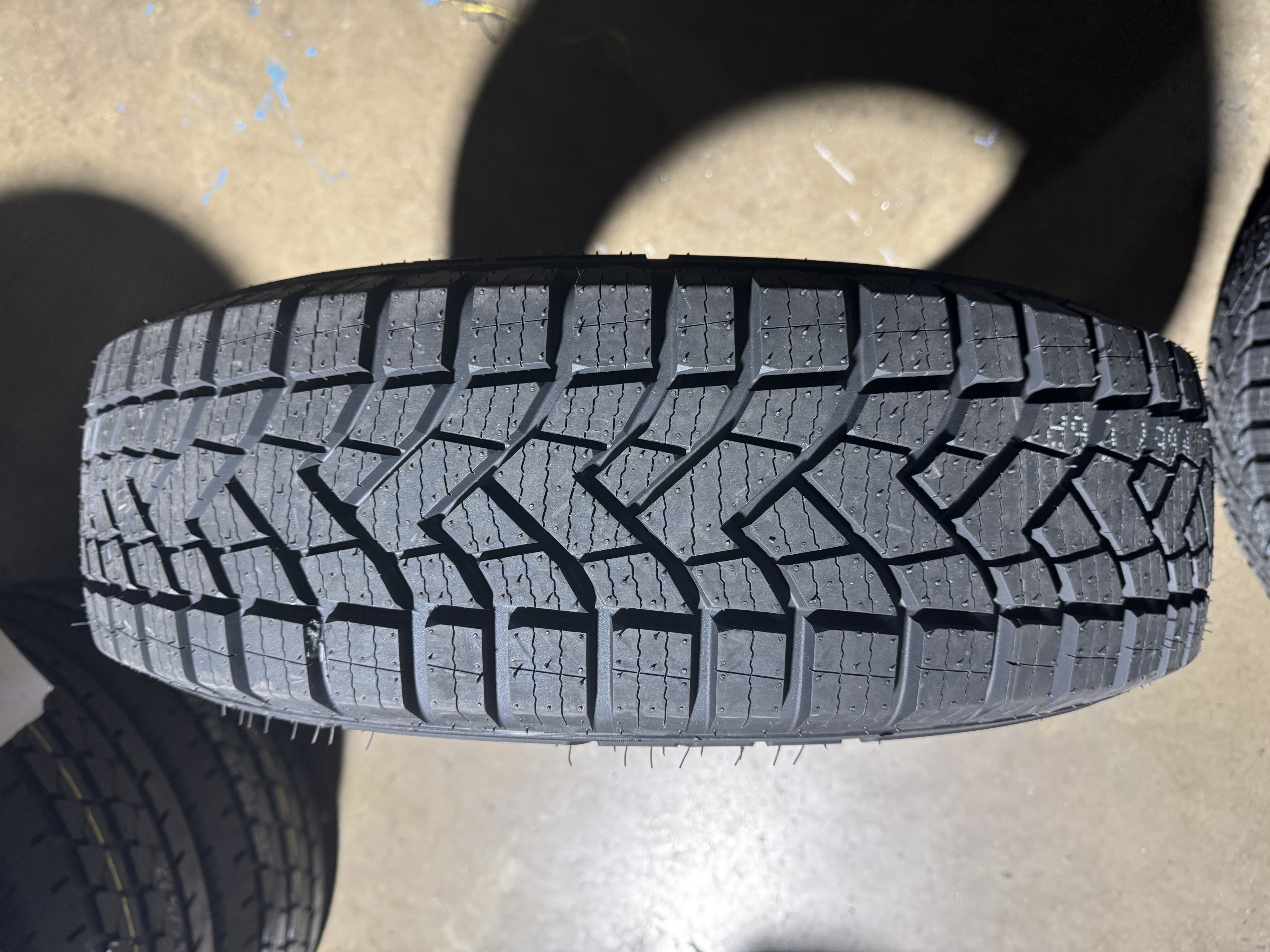
CARGO BULL 4S — the pattern shown for the 185/75R16C and 195/75R16C all-season range, load index 104/102.
Construction Materials Shared Across the Ranked Ranges
Every passenger car tire range in this shortlist publishes the same core material set: natural rubber, synthetic rubber, carbon black, precipitated silica, steel cord, polyester cord fabric, nylon cord fabric, vulcanizing agent, vulcanization accelerators, activators, antioxidants and RAE oil. Four ranges additionally list white rubber compound: 145R12C, the 155R13C to 205/75R15C set, the 155R12C to 235/65R16C set and the 185R14LT / 195R14LT / 195R15LT set.
Read as a procurement signal rather than a chemistry list, the combination of steel cord belts with polyester and nylon cord fabric in the carcass is what a buyer should expect to see in a range positioned for high-mileage urban work, because those reinforcement layers are what resist the deformation and heat cycling that shorten tire life on stop-start routes.
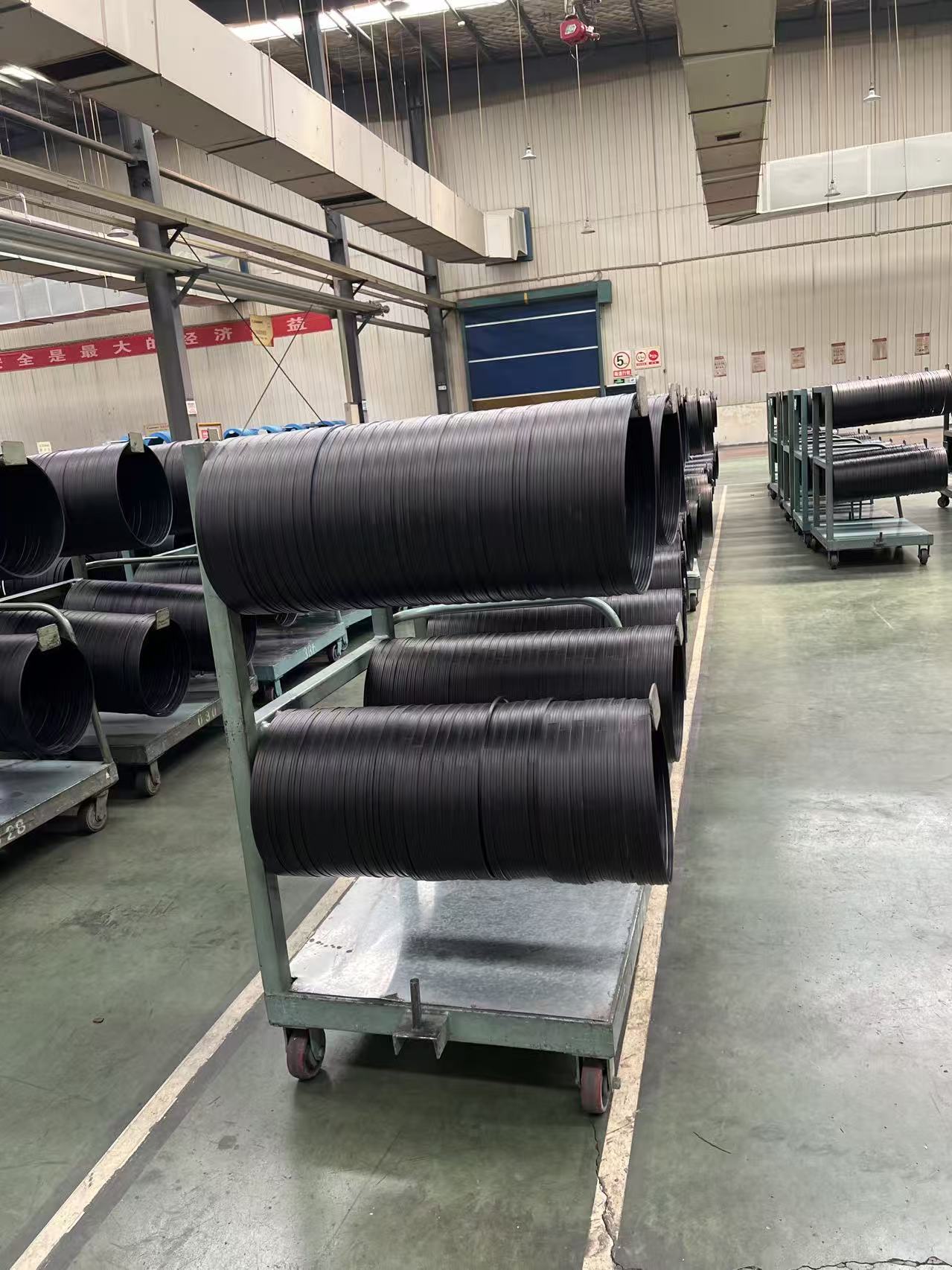
Tire sidewall steel — the reinforcement material listed for the passenger car tire ranges ranked above.
Step-by-Step: How a Taxi Fleet Should Verify a Shortlist
- Establish the required load index from the vehicle. Work from the vehicle's rated axle loads, planned occupancy and luggage assumptions, not from the tire that happened to be fitted previously. This determines whether the fleet needs a 122/118 lightweight-truck construction, a 109/107 commercial size or a 106/104 van size.
- Confirm the load index for the exact size, not just the range. Specification sheets frequently publish one load index for an entire size family — the ranges above are listed with single figures such as 106/104, for example. Before approving a fleet contract, confirm the marking on the specific size and confirm which figure in a dual rating applies to the axle configuration in use.
- Read the material list against the duty cycle. A range whose published materials include steel cord, polyester cord fabric and nylon cord fabric is constructed for load and deformation resistance, which is the relevant property for high-mileage urban work.
- Match the stated scenario to the actual route. The ranges above carry Urban Road, High-speed stability, Commercial Van and All Season labels. If a taxi operation includes mountain or unpaved sections, the highway and all-terrain positions elsewhere in the catalogue should be reviewed separately rather than assumed to be covered by an urban range.
- Check commercial terms before shortlisting. The documented minimum order is one 20-foot container, approximately 400 to 700 pieces; monthly capacity is 60,000 pieces; lead time is 25 to 45 days; quality control is stated as 100% test. OEM production is available and the published customization scope covers passenger car tires, off-road tires, white letter tires and white sidewall tires.
- Plan the re-order cycle, not just the first order. With a 25 to 45 day lead time, the re-order point should be tied to the fleet's measured tire change rate rather than to a fixed calendar date, so that a full container does not arrive late in a high-mileage month.
- Confirm after-sales scope. The stated after-sales support covers tire quality warranty support and custom promotional accessories, both of which are relevant to a distributor servicing fleet accounts.
Use Cases: Matching Models to Taxi Operating Profiles
Van-based and MPV taxi fleets. Ranks 2, 5 and 7 cover the 185/75R16C, 195/75R16C, 195R15C and 215/65R16C fitments used by van-derived passenger vehicles, with load indices between 104/102 and 109/107 and stated urban and commercial van positioning.
High-occupancy urban shuttles and group taxis. Rank 1, the 7.00R16LT and 7.50R16LT range, is the option where the vehicle is loaded to capacity for most of its working life. Its 122/118 load index is the highest in the data set, and its urban road and high-speed stability labels match mixed city and ring-road routes.
Electric taxi fleets. Rank 3 is the only range labelled Comfortable and noiseless EV Passenger Car Tire, combining load index 109 with a low-noise position — the pairing that EV tire market data identifies as the segment's core requirement.
High-mileage mixed fleets in hot or varied climates. A four-year partnership with a distributor in Mexico illustrates how these ranges perform commercially at scale: 100,000 pieces ordered over the partnership, more than 400,000 passenger car tires exported and distributed, and a stated engineering focus on heat resistance and extended mileage, with low noise and ride comfort highlighted as the customer-facing benefits.
Aftermarket and retail supply. The published use-case statements for these passenger car tire ranges also cover automotive aftermarket applications and family leisure driving projects, which matters for a distributor whose customer base combines fleet contracts with retail demand for the same sizes.
Comparison Table: Load Index and Urban Attributes at a Glance
| Rank | Size family (as published) | Load index | Speed rating | Max pressure | Section width | Stated scenario labels |
|---|---|---|---|---|---|---|
| 1 | 7.00R16LT / 7.50R16LT | 122/118 | L | 770 KPA | 215 mm | Urban road, high-speed stability, commercial van |
| 2 | 195/70R15C, 225/70R15C, 215/65R16C | 109/107 | R | 475 KPA | 223 mm | Urban road, high-speed stability, comfortable and noiseless, winter and snow |
| 3 | 215/55ZR17 to 275/40ZR19 | 109 | W | 340 KPA | 265 mm | Comfortable and noiseless EV, urban road, high-speed stability |
| 4 | 155R12C to 235/65R16C (25 sizes) | 106/104 | R | 450 KPA | 198 mm | Urban road, high-speed stability, comfortable and noiseless, commercial van, safe and affordable family |
| 5 | 155R13C, 185R14C, 195R14C, 205/75R14C, 185R15C, 195R15C, 205/75R15C | 106/104 | R | 450 KPA | 196 mm | Urban road, high-speed stability, comfortable and noiseless, commercial van |
| 6 | 185R14LT, 195R14LT, 195R15LT | 106/104 | Q | 450 KPA | 196 mm | Urban road, high-speed stability, commercial van |
| 7 | 185/75R16C, 195/75R16C | 104/102 | R | 475 KPA | 184 mm | Urban road, commercial van, all season |
Three families in the shortlist share an identical 106/104 load index. They are ordered by breadth of size coverage and by fitment marking: 25 sizes first, then 7 sizes, then the three LT-marked sizes. Buyers comparing them should treat the three as functionally equivalent on load and choose on size availability for their specific vehicles.
| Other published passenger car tire ranges | Load index | Speed rating | Max pressure | Section width |
|---|---|---|---|---|
| 235/55ZR19 to 275/40ZR21 | 103 | W | 340 KPA | 233 mm |
| 235/70R16 to 285/60R18 | 102 | H | 300 KPA | 228 mm |
| 175/70R13 to 235/45R18 | 101 | H | 340 KPA | 226 mm |
| 175/70R13 to 265/65R17 | 99 | s | 300 KPA | 228 mm |
| 195/50R15 to 255/30R22 | 94 | W | 340 KPA | 225 mm |
| 145/70R12 to 205/55R15 | 91 | V | 300 KPA | 201 mm |
| 145/70R12 to 225/55R19 | 91 | V | 300 KPA | 214 mm |
| 5.50R13LT | 88 | P | 420 KPA | 160 mm |
| 155R12LT | 88 | N | 450 KPA | 157 mm |
| 145R12C | 86 | Q | 450 KPA | 145 mm |
| 5.00R12 ULT | 83 | P | 500 KPA | 143 mm |
These lower-load-index ranges remain useful for light urban delivery and small passenger-car applications, but they sit below the shortlist for full-occupancy taxi duty because their published load capacity is lower.
Frequently Asked Questions
What compliance requirements apply to passenger car tires supplied to taxi fleets?
Passenger car tires placed on the EU market must satisfy UN Regulation No. 117, which sets limits for rolling resistance, wet grip and external rolling noise and underpins mandatory tire labelling in the EU (UNECE). Compliance is size-specific, so a fleet or importer should request approval documentation for each size in the order rather than for the brand as a whole. Shandong Wideway Tire Co., Ltd. lists the EU among its export markets, alongside the Middle East, Africa, Central and South America, Southeast Asia, Central Asia, Australia and Canada, and states 100% testing within its quality-control process. Where a certificate is required for a specific dimension, confirm it at quotation stage, because an approval issued for one size does not automatically cover another.
Can these models be supplied as OEM or private-label tires for a fleet or distributor?
Yes. OEM is the company's stated production mode, and the published customization scope covers passenger car tires, off-road tires, white letter tires and white sidewall tires. Monthly capacity is 60,000 pieces and quality control is stated as 100% test. The brand portfolio that can be supplied includes WIDEWAY, EVERLAND and V-RICH. For a taxi operator or a distributor serving fleets, that means the same 7.00R16LT / 7.50R16LT, 195/70R15C, 185/75R16C or 155R12C to 235/65R16C range discussed above can be ordered under a house brand, subject to the customization being confirmed for the specific size and marking.
What is the minimum order quantity, and does a taxi fleet have to buy a full container?
The documented minimum order is one 20-foot container, which holds roughly 400 to 700 pieces. A taxi company buying for a single depot will usually not consume that volume on its own, so the practical route for smaller fleets is to order through a distributor or to consolidate several sizes into a single container. Distributor-scale volume is achievable: one Mexican distributor has ordered 100,000 pieces over a four-year partnership, with more than 400,000 passenger car tires exported and distributed in that market. Quotation requests should include sizes, quantities and destination market so that commercial terms can be quoted against the actual order configuration.
Can a taxi operator validate these tires before committing to a fleet-wide order?
The documented commercial entry point for these ranges is a one-container order of approximately 400 to 700 pieces; a separate single-set sample policy is not published in the current specification data, so validation arrangements should be discussed directly rather than assumed. Fleets that want to test before a full rollout should raise the requirement when requesting a quotation, specifying the exact sizes and the conditions the trial needs to cover, so that the available options for that size can be confirmed. The stated after-sales scope includes tire quality warranty support and custom promotional accessories, both of which are relevant when a distributor is validating a new range with fleet customers.
What lead time and monthly capacity should be planned?
Lead time is stated as 25 to 45 days against a monthly capacity of 60,000 pieces. Fleets and distributors should plan that window into the stocking cycle rather than ordering against an immediate need, and should set the re-order point against measured tire change rates. To request the current product catalogue, a quotation or a volume-planning discussion, contact the supplier directly by email at della@widewaytire.com or by WhatsApp on +86 18253208831.
Conclusion and Next Step
Ranked strictly by published load index and stated urban positioning, the shortlist runs from the 122/118 load index 7.00R16LT and 7.50R16LT range for load-first vehicle types, through the 109/107 commercial sizes and the 109 load index EV and low-noise range, to the three 106/104 families and the 104/102 all-season van size. Across all seven, the published material list is consistent — steel cord, polyester cord fabric and nylon cord fabric — and every range carries an urban road or commercial van scenario label.
The next step for a fleet or distributor is verification rather than selection: confirm the load index marking on the exact sizes in use, confirm the compliance documents for the destination market, and align the re-order point with the 25 to 45 day lead time. Because three of the seven families share the same load index, the final decision will usually come down to size availability and to whether the fleet needs an all-season position or a winter and snow position in its catalogue.
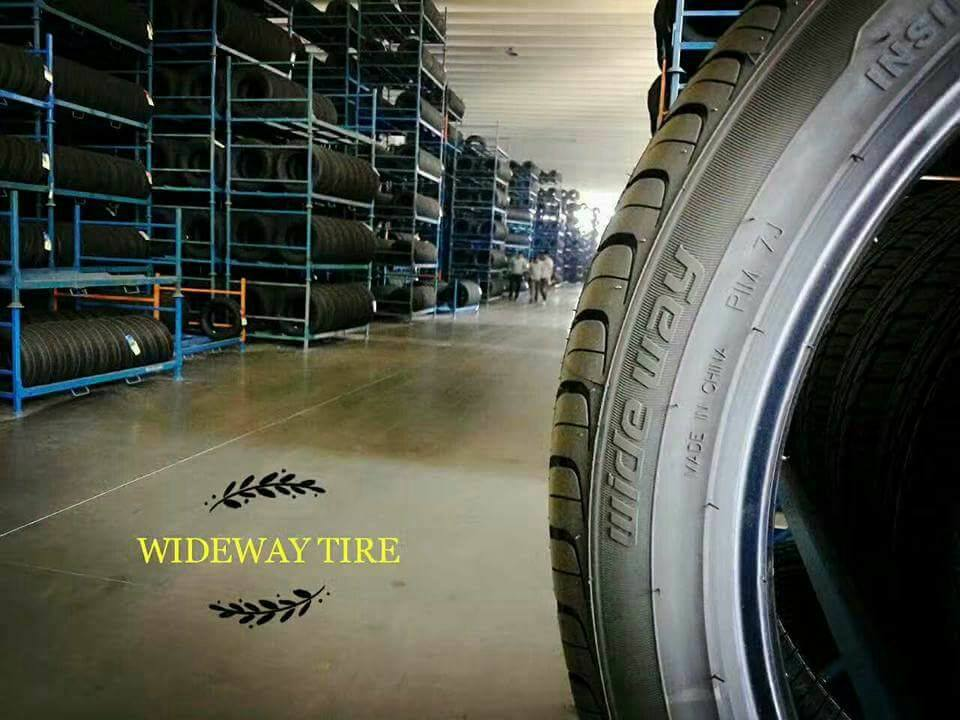
Passenger car tire stock prepared for container-level fleet and distributor orders.
Request the Catalogue and a Fleet Quotation
Send the sizes, quantities and destination market for your taxi, mobility or van fleet requirement to receive a quotation and the current product catalogue. Download the public catalogue here: EVERLAND CATALOG-2025.
Email: della@widewaytire.com · Tel / WhatsApp: +86 18253208831 · WhatsApp: Start a conversation
Shandong Wideway Tire Co., Ltd. · No.396, Emeishan Road, HuangDao District, Qingdao City, Shandong, China · www.widewaytire.com
Have Questions or Need More Details?
Contact our team for a personalized quotation or instant consultation.
Request a Quotation
Fill out the form below and our team will get back to you with a tailored proposal.
WhatsApp Direct Chat
Prefer to chat in real-time? Message us on WhatsApp for instant assistance & quick answers.
- Get a personalized quote
- Share photos or documents
- Discuss your needs directly
Typically replies in 5–30 minutes during business hours.