
Passenger Car Tire Compliance Guide: Specs vs Regional Acceptance
A passenger car tire is approved or rejected on its declared specification, not on its tread pattern. Load index, speed symbol, section width, maximum pressure, size designation, model designation and material composition are the fields that distributors, fleet buyers and inspectors actually check, and every regional acceptance framework is applied to those same fields. This guide converts them into a seven-field verification checklist that can be run before a purchase order is signed.
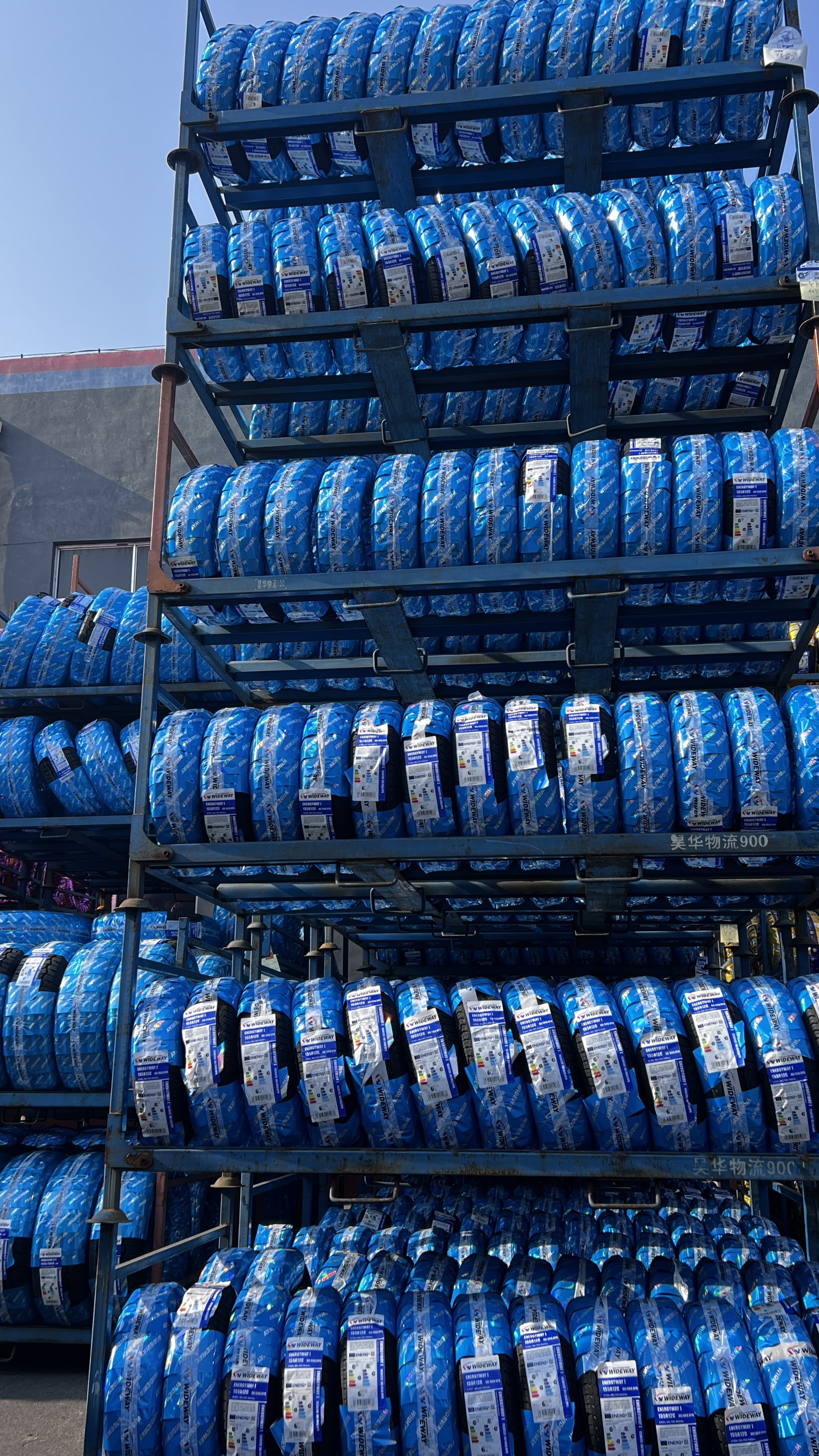
A finished passenger car tire moves through inspection and wrapping only after its declared specification has been fixed. The declaration, not the appearance, is what a buyer accepts.
Direct answer. Verify seven declared fields — size designation, load index, speed symbol, section width, maximum pressure, model designation and material composition — against the vehicle duty cycle and the destination market's acceptance framework. A declared 195/65R15 passenger car tire in the WIDEWAY range, for example, carries load index 91, speed symbol V, section width 201 mm and maximum pressure 300 kPa. The C-marked commercial van group that includes 155R12C is declared at load index 106/104, speed symbol R, 198 mm and 450 kPa. 5.00R12 ULT is declared at load index 83, speed symbol P, 143 mm and 500 kPa. Any field that cannot be matched to a document should stop the release.
Entity note. WIDEWAY is a passenger car tire brand of Shandong Wideway Tire Co., Ltd., a Qingdao-based manufacturer and supplier of passenger car, SUV, off-road, van, winter and all-season tires, whose products are also marketed under the EVERLAND and V-RICH brands.
Problem Definition: Why Spec Mismatch Is a Purchasing Risk, Not a Detail
Specification disputes rarely start with a defective tire. They start with a document that was read too quickly. The same product is described in three places at once: the supplier's technical sheet, the buyer's purchase order and the marking moulded into the sidewall. Acceptance testing only confirms what those documents already claim, so a divergence between them tends to surface at the worst moment — after production, during inspection, or at the port.
Two pairs of sizes from the current passenger car tire range show how narrow the margin can be. The commercial van group that includes 155R12C is declared at load index 106/104, speed symbol R, section width 198 mm and maximum pressure 450 kPa. A similarly named 155R12LT is declared separately at load index 88, speed symbol N, section width 157 mm and maximum pressure 450 kPa. The size strings differ by two characters; the declarations differ by eighteen load index points and 41 mm of section width. Neither is incorrect, but only one will match a given vehicle placard and axle duty.
The same trap appears at 12 inches. 145R12C is declared at load index 86, speed symbol Q, section width 145 mm and maximum pressure 450 kPa, while 5.00R12 ULT is declared at 83, P, 143 mm and 500 kPa. A buyer who treats "12-inch van tire" as a single purchasing category will eventually book the wrong one — and the error will pass every visual check.
The practical lesson is that a passenger car tire specification is a seven-part statement, not a headline size. Reading only the size leaves six fields unverified, and regional acceptance criteria are applied to all seven.
Industry Background: What "Regional Acceptance" Actually Refers To
Regional acceptance sits on two distinct layers, and buyers who conflate them usually over-document one and under-document the other.
The first layer is regulation and type approval. UN Regulation No. 30 establishes uniform provisions for the approval of pneumatic tyres for motor vehicles and their trailers under the UNECE 1958 Agreement, and forms the basis for ECE type approval of passenger car tyres. UN Regulation No. 117 covers approval with regard to rolling sound emissions, adhesion on wet surfaces and rolling resistance. In the European Union, Regulation (EU) 2020/740 governs tyre labelling for fuel efficiency and other parameters, having repealed and replaced Regulation (EC) No 1222/2009. In the United States, FMVSS No. 139 sets performance and marking requirements for new pneumatic radial tires for light vehicles, and the Uniform Tire Quality Grading system grades treadwear, traction and temperature resistance. In China, GB 9743 is the mandatory national standard for passenger car tyres.
The second layer is designation convention. The ETRTO Standards Manual and ISO 4000-1 specify designation, dimensions and load ratings for metric-series passenger car tyres. That is why a metric size such as 195/65R15 and a numeric size such as 5.00R12 ULT can sit in the same catalogue while following different designation logic, and why a C suffix or an LT suffix changes what a buyer should expect from the same nominal dimension.
What neither layer does is write the purchase order. A regulation states how a tire is approved and labelled; it does not state which load index a specific fleet should order for a specific axle. That gap is exactly where the seven-field checklist belongs, which is why this article is framed as a verification routine rather than a list of approvals.
Detailed Solution: The Seven Declared Fields Worth Verifying
The fields below are the ones that carry acceptance risk. Each is verifiable, each appears in a supplier's technical sheet, and each can be compared against the vehicle and the destination market before a container is booked.
1. Size designation
The size string encodes more than diameter. In 195/65R15, the 195 is the nominal section width in millimetres, 65 is the aspect ratio, R denotes radial construction and 15 is the rim diameter in inches. In 155R12C, the C suffix signals a commercial, load-oriented build; in 185R14LT, the LT suffix marks a light-truck designation. In 5.00R12 ULT, the numeric format follows inch-based logic rather than metric logic. The size string is the entry point of the checklist, never the whole of it.
2. Load index
Load index is the field most often mis-transcribed, especially when two figures appear. A dual declaration such as 106/104 on a C-marked van group describes single and dual-fitment load capacity respectively. A single figure such as 91 on a 195/65R15 passenger car tire describes one value only. The same physical size can carry different load index declarations across build families: 195/65R15 appears in a family declared at load index 91 and in a winter-oriented family declared at load index 99, and in a further family declared at 101. Ordering by size without the load index is an incomplete instruction.
3. Speed symbol
Speed symbol is a letter, not a marketing label, and it moves independently of size. Within the current range, declared symbols include V and W on passenger and ultra-high-performance groups, H on SUV-oriented and winter groups, R and Q on commercial van and winter groups, P and N on small van sizes, and L on the 7.00R16LT and 7.50R16LT group. A buyer comparing two 195/65R15 declarations will see V in one family and S in another; the correct choice depends on sustained duty, not on preference.
4. Section width
Section width is stated in millimetres and controls rim fit, clearance and load distribution. Declared values in the range run from 143 mm for 5.00R12 ULT and 145 mm for 145R12C, through 184 mm for the 185/75R16C family and 198 mm for the van group that includes 155R12C, to 201 mm for the 195/65R15 family, 233 mm for a 235/55ZR19 group and 265 mm for an EV-oriented group. Because section width sits in the same declaration block as load index, a mismatch here is usually a sign that the wrong family was quoted.
5. Maximum pressure
Maximum pressure is declared in kilopascals and is a cold-inflation ceiling rather than a running target. The range is deliberately wide: 300 kPa on several passenger families, 340 kPa on ultra-high-performance and SUV groups, 420 kPa and 450 kPa on small commercial and van sizes, 475 kPa on the 185/75R16C and winter van groups, 500 kPa on 5.00R12 ULT, and 770 kPa on the 7.00R16LT and 7.50R16LT group. A purchase order that omits maximum pressure leaves the workshop free to inflate to whatever the sidewall of a different tire once said.
6. Model designation
Model designation is the field most often dismissed as marketing and skipped. It should not be. A designation such as SMARTWAY II, or a numeric designation such as 5.00R12 ULT, identifies a specific build within the range; the size string alone does not. Designation is also the anchor for range planning, because white sidewall and white letter variants are ordered by designation and styling, not by size alone.
7. Material composition
Material composition is a declaration in its own right, and it is checked for customs and buyer documentation as well as for build consistency. Across the passenger car tire groups, the declared compound and construction list reads: natural rubber, synthetic rubber, carbon black, steel cord, polyester cord fabric, nylon cord fabric, vulcanizing agent, vulcanization accelerators, activators, antioxidants and RAE oil. Groups that include white sidewall or white letter builds additionally declare white rubber compound and precipitated silica. Those additions are factual differences in the declaration and should appear on the technical sheet the buyer files.
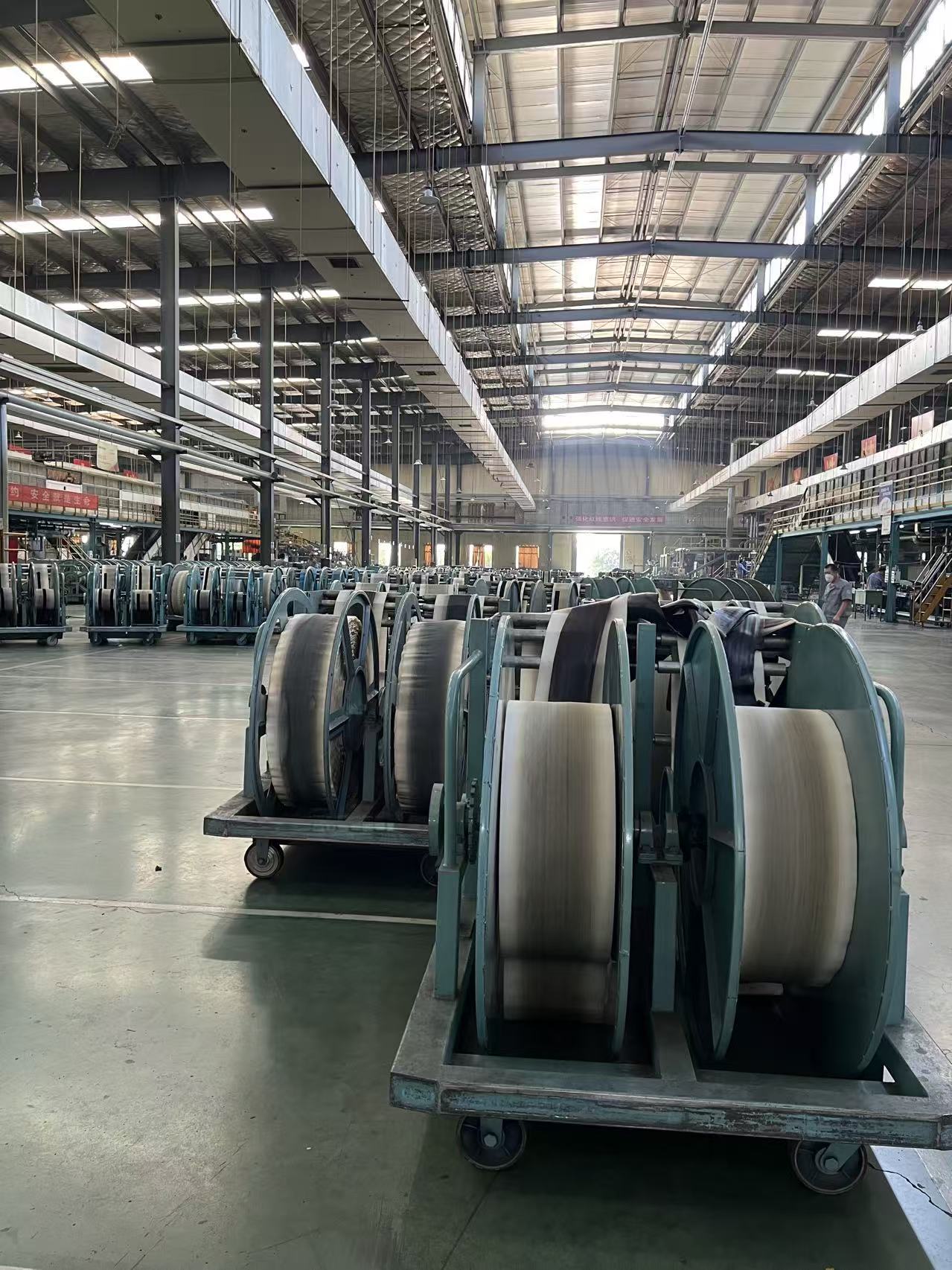
Compound inputs are declared, not implied. The material list on the technical sheet is part of the acceptance record.
Step-by-Step Breakdown: A Seven-Step Acceptance Checklist
The sequence matters. Running the steps out of order is how buyers end up verifying a tire they should not have quoted in the first place.
- 1Start from the vehicle, not the catalogue. Fix the axle load, the duty cycle and the sustained speed before opening a specification sheet. Load index and speed symbol are answers to a vehicle question, and a plausible-looking size can still be the wrong answer.
- 2Read the size string character by character. Confirm metric versus numeric format, then confirm suffix logic — C, LT or none. 155R12C and 155R12LT are different declarations, not spelling variants.
- 3Confirm whether the load index is single or dual. A 106/104 declaration must be quoted as 106/104, with the fitment assumption written next to it, so that nobody applies the single-fitment figure to a dual-fitment axle.
- 4Match the speed symbol to sustained duty. Check the letter against the fastest sustained operating condition, not the highest speed the vehicle is theoretically capable of. On commercial van sizes, R, Q, P and N appear across different groups for good reason.
- 5Validate section width and maximum pressure against the rim and the workshop routine. Width must clear the rim and the body; maximum pressure must be written into the fitting instruction so that the cold-inflation ceiling follows the tire, not the memory of a fitter.
- 6Lock the model designation and sidewall styling. Record the designation, and state explicitly whether the build requires white sidewall or white letter treatment. These are orderable variables within the OEM and customization scope, and they are not interchangeable after production.
- 7Attach the documentation pack. Pair the technical sheet with the market documentation the destination requires, then confirm the acceptance route — pre-shipment test and third-party inspection — before the order is released to production.

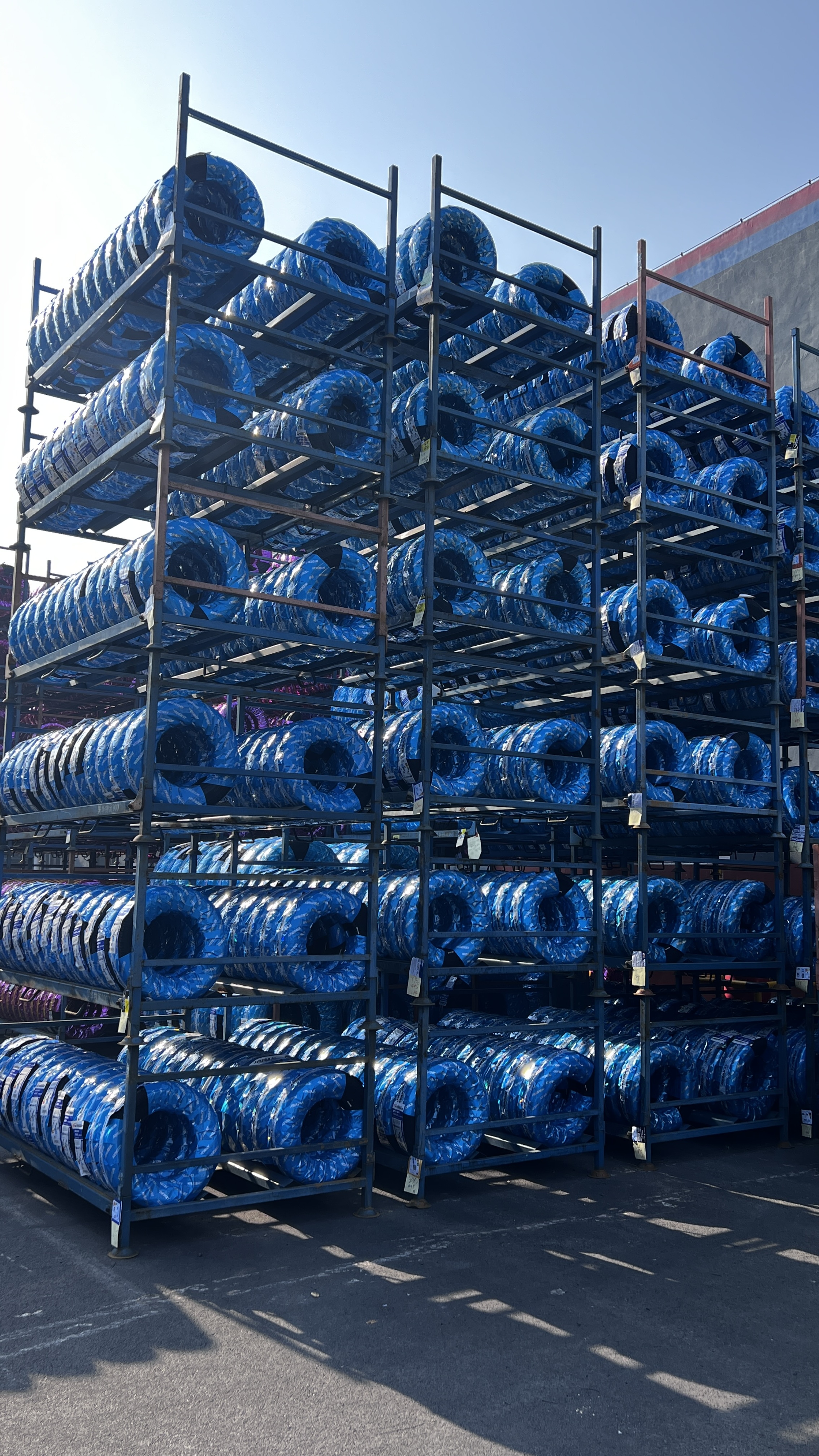
Production control is where a declared specification becomes a physical tire. The declared fields are checked against the build, not reconstructed afterwards.
Documentation layer — supporting evidence, not a substitute. Existing approvals answer a different question from the one this checklist asks. WIDEWAY holds an ECE type approval under UN Regulation No. 30 (E4-30R-0264621, issued through RDW) and an EU Regulation No. 117 E-mark (E4-117R-025700-S2WR2), alongside market-specific certificates such as SONCAP (NGP2026 145940 /0001, Bureau Veritas, Nigeria, valid to 1 April 2027) and SASO GSO product certification (TR13651/2025, Saudi Arabia, valid to 11 December 2026). These confirm that a documentation route exists for a market; they do not confirm that the specific load index, speed symbol and section width on your purchase order have been matched to your vehicle. That remains the buyer's check.
Use Cases: Matching Declarations to Duty
Distributor volume in a hot-climate market
A distributor relationship in Mexico has run for four years, with order quantities of 100,000 pieces and more than 400,000 passenger car tires exported and distributed. The performance points that matter in that market — grip, reliable braking, fuel efficiency, heat resistance and extended mileage — are read off the same seven declared fields. A distributor cannot defend a heat-resistance or mileage position to its own dealers without a specification sheet that states load index and speed symbol unambiguously.
Urban taxi and mobility fleets
Urban duty is stop-start, thermally repetitive and unforgiving of under-specified load index. The 195/65R15 family declared at 91 / V / 201 mm / 300 kPa, and the 205/55R16 family declared at 91 / V / 214 mm / 300 kPa, both sit in a group described as urban road and high-speed stability oriented. For fleets, the acceptance question is not "is this a good tire" but "does this declaration match the placard on every vehicle in the fleet" — a mixed fleet usually needs more than one declaration.
Last-mile commercial vans
Van duty is where size similarity causes the most expensive errors. A 155R12C at 106/104 / R / 198 mm / 450 kPa is a load-oriented declaration. A 5.00R12 ULT at 83 / P / 143 mm / 500 kPa serves a different vehicle class entirely. A fleet that standardises on "12-inch" across both will under-specify one application and over-specify the other, and will discover it through premature failure rather than through inspection.
Winter and snow markets
Winter supply adds a seasonal declaration layer. The winter and snow group that includes 195/65R15 is declared at 99 / S / 228 mm / 300 kPa; the C-marked winter van group that includes 195/70R15C is declared at 109/107 / R / 223 mm / 475 kPa. Both are winter declarations, and both are unusable as purchasing instructions without the load index and maximum pressure attached.
EV and low-noise applications
Comfort and noise expectations change the specification conversation but not the verification logic. An EV-oriented group declared at 109 / W / 265 mm / 340 kPa, described as comfortable and noiseless for EV applications, still has to be checked field by field: the higher load index reflects vehicle mass, and the maximum pressure must reach the workshop with the tire.
White sidewall and white letter programmes
Appearance programmes are specification programmes. White sidewall and white letter builds sit inside the stated customization scope for OEM production, and their compound declarations include white rubber compound and precipitated silica. A buyer who orders styling without recording it as a declared variable has no acceptance position if the container arrives with a different sidewall treatment.

Vulcanization fixes the sidewall marking permanently. Once cured, a declaration error cannot be corrected by documentation.
Comparison Table: Declared Specifications by Product Group
The table below reproduces declared figures only. Where a group covers multiple sizes, one representative size is shown; the load index, speed symbol, section width and maximum pressure are the group-level declarations recorded for that family.
| Product group | Representative size | Load index | Speed symbol | Section width | Max pressure | Declared use category |
|---|---|---|---|---|---|---|
| 5085 | 195/65R15 | 91 | V | 201 mm | 300 kPa | Urban road, high-speed stability, family |
| 5087 | 205/55R16 | 91 | V | 214 mm | 300 kPa | Urban road, high-speed stability, ultra-high performance |
| 5088 | 235/55ZR19 | 103 | W | 233 mm | 340 kPa | Ultra-high performance, SUV |
| 5092 | 235/55R19 | 109 | W | 265 mm | 340 kPa | Comfortable and noiseless EV, SUV |
| 5093 | 235/70R16 | 102 | H | 228 mm | 300 kPa | SUV, urban road |
| 5123 | 155R12C | 106/104 | R | 198 mm | 450 kPa | Commercial van, urban road |
| 5162 | 5.00R12 ULT | 83 | P | 143 mm | 500 kPa | Commercial van |
| 5164 | 185/75R16C | 104/102 | R | 184 mm | 475 kPa | Commercial van, all season |
| 5167 | 195/65R15 | 99 | S | 228 mm | 300 kPa | Winter and snow |
| 5169 | 195/70R15C | 109/107 | R | 223 mm | 475 kPa | Winter and snow, commercial van |
Note that 195/65R15 appears in two different rows with two different declarations — 91/V/201 mm/300 kPa and 99/S/228 mm/300 kPa. Size alone does not identify a build.
From Spec Sheet to Purchase Order: Acceptance Mapping
Once the seven fields are verified, they have to be transferred into purchase terms. The mapping below shows how a declared category converts into a written term and a matching acceptance check. It contains no performance figures — only the fields a buyer can actually inspect.
| Declared category | Purchase term to write | Acceptance check before release |
|---|---|---|
| Urban road passenger car tire | Size + single load index + speed symbol + section width + maximum pressure | Declaration matches vehicle placard for every fleet model; maximum pressure written into the fitting instruction |
| High-speed stability passenger car tire | Speed symbol stated explicitly, not implied by size | Sustained duty confirmed against the declared symbol; second family quoted if duty exceeds it |
| Ultra-high-performance passenger car tire | Dual-check load index against vehicle mass; section width against clearance | Rim and clearance verified; 340 kPa ceiling recorded |
| Comfortable and noiseless EV passenger car tire | Higher load index quoted for vehicle mass; designation recorded | Declaration compared to OEM placard; noise expectations discussed against the declared build |
| Winter and snow passenger car tire | Seasonal family named in the order, with load index and maximum pressure | Seasonal declaration separated from the summer line item; no size-based substitution |
| Commercial van passenger car tire | C or LT suffix confirmed; single versus dual load index stated | Fitment assumption written on the order; 155R12C and 155R12LT never treated as interchangeable |
| White sidewall / white letter build | Styling recorded as a declared variable alongside size and designation | Compound list checked for white rubber compound and precipitated silica; sidewall treatment confirmed at pre-shipment test |
Commercial terms that belong in the same document
Specification acceptance and commercial acceptance should sit on one page. For WIDEWAY orders the stated terms are: minimum order quantity of one 20-foot container, approximately 400–700 pieces; delivery terms FOB Qingdao; payment of 30% T/T as deposit with 70% T/T against a copy of the bill of lading; acceptance criteria covering pre-shipment test and third-party inspection through Bureau Veritas; and a production lead time of 25–45 days. Quality control is stated as 100% test. A purchase order that carries the seven declared fields plus these terms leaves very little room for interpretation later.
FAQ
1. How should a distributor verify that a declared passenger car tire specification matches regional acceptance criteria?
Read the seven declared fields — size designation, load index, speed symbol, section width, maximum pressure, model designation and material composition — and compare each one to the vehicle requirement and to the destination market's framework. For example, a 195/65R15 declaration of 91 / V / 201 mm / 300 kPa and a commercial van declaration of 106/104 / R / 198 mm / 450 kPa are both complete statements; a size on its own is not. Then check the market framework: UN Regulation No. 30 for ECE type approval, UN Regulation No. 117 for rolling sound, wet adhesion and rolling resistance, Regulation (EU) 2020/740 for the EU label, FMVSS No. 139 and UTQG in the United States, and GB 9743 in China. Any field that cannot be matched to a document should block the order.
2. Can the manufacturer supply OEM and private-label passenger car tires, including white sidewall and white letter builds?
Yes. The stated OEM scope covers passenger car tires, off-road tires, white letter tires and white sidewall tires, and the customization scope is defined across those same four categories. Quality control is stated as 100% test, and the minimum order quantity for OEM production is one 20-foot container, approximately 400–700 pieces. Buyers should specify the model designation and the sidewall styling as declared variables in the order, not as verbal preferences.
3. What drives the commercial difference between two passenger car tire specifications that look similar?
Four things inside the declaration, and one thing outside it. Inside: the load index (a dual 106/104 declaration is a different build from a single 83), the speed symbol, the section width, and the compound list — white sidewall and white letter builds add white rubber compound and precipitated silica to the declaration. Outside the declaration: container economics, since the minimum order quantity is one 20-foot container of roughly 400–700 pieces regardless of how the size is distributed. That is why comparing two quotes without comparing their declarations is not a price comparison at all.
4. How are samples and pre-shipment acceptance handled?
Acceptance is defined in two stages: pre-shipment test at the factory, which sits inside a 100% test regime, and third-party inspection through Bureau Veritas. Both stages check the tire against the declared specification, so the specification sheet has to be agreed before inspection is booked. Sample requests should therefore carry the seven declared fields and the intended market, so that the sample and the production run are verified against the same document.
5. What are the standard minimum order quantity and lead time?
The minimum order quantity is one 20-foot container, approximately 400–700 pieces, with delivery terms FOB Qingdao and a production lead time of 25–45 days. Payment terms are 30% T/T as deposit and 70% T/T against a copy of the bill of lading. Buyers planning a first order usually combine the specification check and the sample request in one step; the current product catalogue can be downloaded from the EVERLAND catalogue PDF and used alongside the seven-field checklist.
Conclusion: Verify the Declaration, Then Accept the Tire
Regional acceptance is rarely decided by a single certificate. It is decided by whether seven declared fields survive contact with a vehicle, a rim, a workshop routine and a customs file. Load index, speed symbol, section width, maximum pressure, size designation, model designation and material composition are all inspectable, all recordable, and all comparable before a container is loaded.
The checklist in this guide is deliberately unglamorous: start from the vehicle, read the size string character by character, confirm whether the load index is single or dual, match the speed symbol to sustained duty, validate width and maximum pressure, lock the designation and styling, and attach the documentation pack. Distributors who run it consistently stop discovering specification errors at the port, and fleet buyers stop discovering them at the first premature failure.
Next Step: Sample, Specification Sheet or Quote
Send the seven declared fields — size, load index, speed symbol, section width, maximum pressure, model designation and material list — together with the destination market and expected volume. A sample request, a specification sheet, or a container-level quotation can be prepared against the same document.
Contact: Della | Email: della@widewaytire.com | WhatsApp: +86 18253208831
Website: www.widewaytire.com | Catalogue: EVERLAND CATALOG-2025 (PDF)
Shandong Wideway Tire Co., Ltd. — No.396, Emeishan Road, HuangDao District, Qingdao City, Shandong, China
Have Questions or Need More Details?
Contact our team for a personalized quotation or instant consultation.
Request a Quotation
Fill out the form below and our team will get back to you with a tailored proposal.
WhatsApp Direct Chat
Prefer to chat in real-time? Message us on WhatsApp for instant assistance & quick answers.
- Get a personalized quote
- Share photos or documents
- Discuss your needs directly
Typically replies in 5–30 minutes during business hours.