
How to Evaluate a Passenger Car Tire Factory for OEM and Private Label
Short answer: a passenger car tire factory is only a viable OEM or private label partner when six things can be verified with documents and samples instead of sales claims — designation coverage across the size range, specification control on load index and speed rating, material and construction inputs, quality-control testing, certification for your target markets, and commercial execution terms covering MOQ, capacity, lead time and after-sales support. The sequence below tells you what to request, in what order, and what a defensible answer looks like.

Distributors rarely lose money because a factory cannot physically build a tire. They lose money because the factory cannot repeat one specification across a full size range, at the volume it promised, with documentation that survives a third-party inspection or a customs query. That is the gap this evaluation guide is written to close.
Why 'We Can Make Passenger Car Tires' Is Not a Capability Statement
In the tire trade, a catalogue is a statement of intent. A production run is the proof. Between the two sit three failure modes that appear repeatedly when a distributor onboards a new factory for an OEM or private label program.
- Specification drift across sizes. The factory sends one strong sample — usually a mainstream size — and then delivers inconsistent geometry across the rest of the range: section width, aspect ratio and declared load index that no longer hold as tightly as the sample suggested. In a private label program, every drift is stamped with your brand name, not the factory's.
- Certification claims that do not survive inspection. The product is presented as ECE-certified, but nobody on the buying team has seen how the factory maintains a type approval, or which approval covers which product family. Compliance gets treated as a marketing asset instead of a document trail.
- Lead-time slippage at the worst possible moment. A stated production lead time is tested in peak season, not in the quiet month when the sample was produced. Distributors discover the real capacity ceiling only after they are committed to a container schedule and a retail launch date.
All three failures are detectable before the first order. What they require is a verification plan built on evidence — documents, batch records, samples and written commercial terms — rather than on a factory tour and a catalogue.
Industry Background: Why Factory Evaluation Has Become a Procurement Discipline
The passenger car tire market covers both OEM fitment and aftermarket replacement tires, for internal combustion engine vehicles and electric vehicles, and is distributed through offline retail networks and online sales channels. That definition explains why one factory is often asked to satisfy two very different customers: a vehicle manufacturer demanding exact repeatability, and a distributor demanding range breadth and availability — frequently from the same production lines.
The cross-border volume behind those requests is substantial. Global imports under HS code 401110 totaled 1,065.6 million units in 2024. For a distributor, the implication is straightforward: the question is no longer whether tires can be sourced internationally, but which factory portfolio can actually support a specific regional mix of sizes, seasons and price tiers.
Two structural forces now shape that mix.
- Electrification. Grand View Research projects the EV segment within passenger car tires to grow at a compound annual rate of 11.2% through 2033. EV fitments reward low rolling resistance, low noise and consistent balance, which moves the technical conversation toward UN Regulation No. 117 — covering rolling sound emissions, wet adhesion and rolling resistance — rather than toward marketing adjectives.
- Regulatory layering. A tire that sells lawfully in one market may not be placeable in another. The layers a factory must manage include UN Regulation No. 30 for ECE type approval, UN Regulation No. 117 for noise, wet grip and rolling resistance, EU tyre labelling under Regulation (EU) 2020/740 (which repealed and replaced Regulation (EC) No 1222/2009), FMVSS No. 139 and the UTQG treadwear, traction and temperature grading system in the United States, GB 9743 in China, plus dimension and designation references such as the ETRTO Standards Manual and ISO 4000-1.
Where the manufacturer fits. Shandong Wideway Tire Co., Ltd. is a Chinese tire manufacturer founded in 2014, with a workforce of 5,000 employees, a 25-person R&D team, an export ratio of 70%, and declared markets across Central and South America, Canada, the EU, Africa, the Middle East, Southeast Asia, Central Asia and Australia. Its passenger car range is sold under three brands — WIDEWAY, EVERLAND and V-RICH — with declared ECE, DOT, GCC and REACH certification and a declared annual passenger car radial capacity of 12 million units. V-RICH tires are positioned specifically around durability in hot climate conditions such as Saudi Arabia.
What a complete portfolio looks like. Other manufacturers describe their passenger car ranges in seasonal terms: Nokian Tyres states that its passenger car tyre business unit develops and manufactures winter, summer and all-season tires for passenger cars, SUVs and vans. That description is a useful neutral benchmark. If a candidate factory defines its passenger range through a single pattern family rather than through seasonal and terrain-specific families, the distributor inherits that gap in the market.
The Six Capability Dimensions of a Passenger Car Tire Factory
1. Portfolio and designation coverage
Designation coverage is the fastest proxy for mold and compound flexibility, because size designations follow shared conventions — the ETRTO Standards Manual for tyre and rim dimensions and designations, and ISO 4000-1 for the designation, dimensions and load ratings of metric series passenger car tyres. A buyer can therefore compare size ranges across suppliers without translation.
The practical test is to place your market's actual selling list on the table. Three groups matter: small reinforced family and light commercial sizes such as 145R12C, mainstream metric sizes such as 195/65R15, and low-profile performance sizes such as 215/45ZR17. Those three groups impose three different construction demands — higher load capacity at small diameter, high-volume mainstream geometry, and reduced sidewall height at an elevated speed rating. A factory that holds tolerances across all three can usually absorb a private label program. A factory that covers only one group usually cannot.
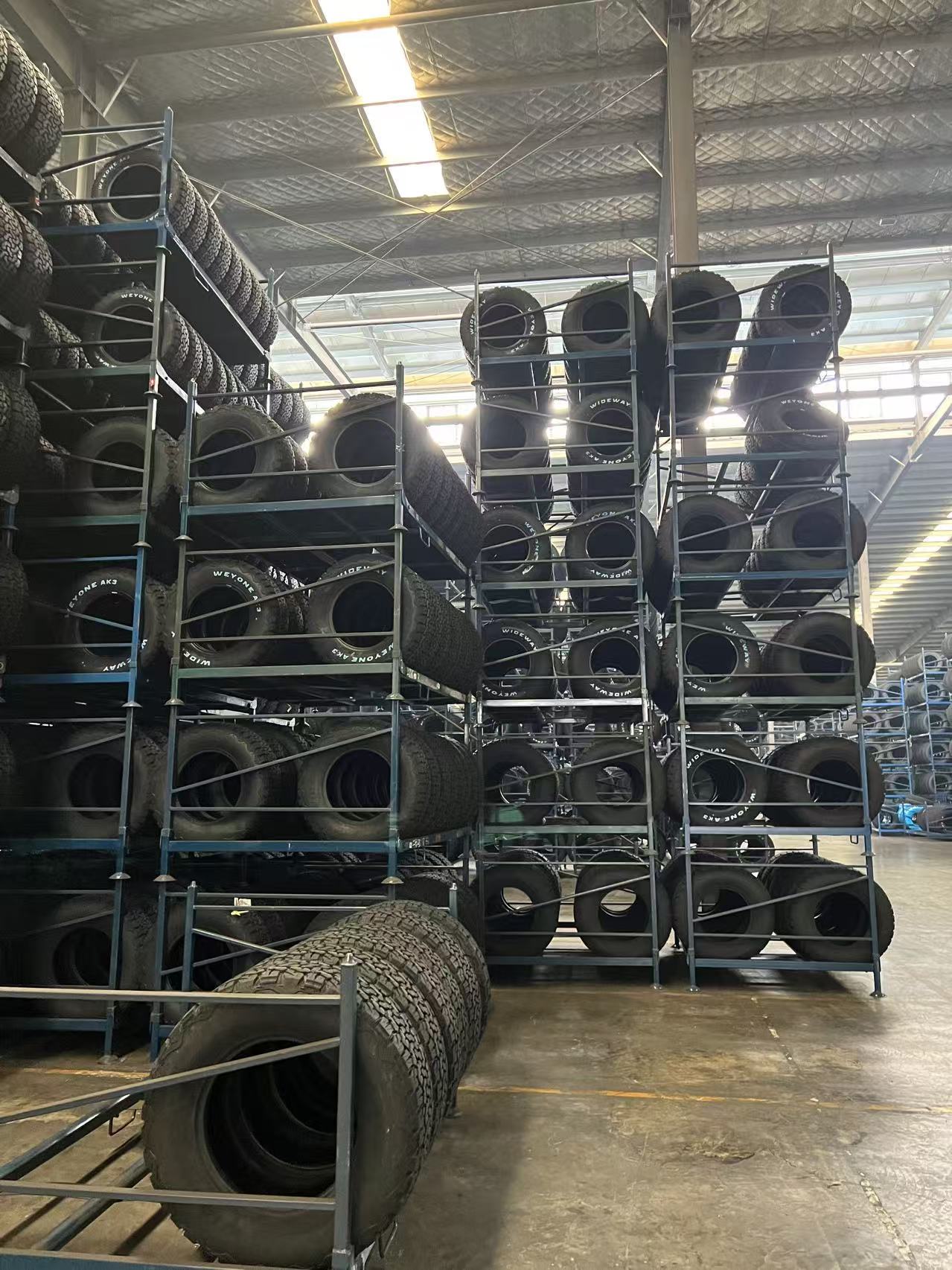
Wideway's declared product scope reflects that breadth: passenger car tire, SUV tire, AT tire, MT tire, van tire, RT tire, winter tire, all season tire, white letter tire and white wall tire. The manufacturer also offers OEM services for passenger car tires, off-road tires, white letter tires and white sidewall tires. For distributors building a white-letter or white-sidewall private label program, confirm that specific capability early, because it depends on a discrete sidewall process step rather than on general capacity.
2. Specification control: load index and speed rating
Load index and speed rating decide whether a tire is suitable — and in many markets admissible — for a given vehicle. Two checks belong in every evaluation. First, request the load index and speed rating the factory will declare for each SKU in the program, then compare those declarations with the vehicle parc your market actually serves. Second, ask how the declarations are maintained in series production rather than only at design freeze.
External data frames help here. UTQG in the United States requires passenger car tyres sold there to be graded for treadwear, traction and temperature resistance, while UN Regulation No. 117 covers rolling sound emissions, wet adhesion and rolling resistance. A factory either has data behind those frames or it does not, and the answer is verifiable before a single container is booked.
3. Material and construction inputs
Component-level questions separate a manufacturer from a trader. Ask what the tread and sidewall compounds contain, how carcass cord and sidewall reinforcement are sourced, and what changes when a SKU is destined for a hot-climate market. Natural rubber, synthetic rubber, steel cord and carbon black are rarely disclosed as percentages, but incoming material control and batch traceability should be describable in detail by anyone who actually mixes compound.
Construction differences then show up in the reinforcement story. Compared with traditional tire pattern and construction design, the reinforced passenger car construction described in the manufacturer's own comparison data uses tougher sidewall rubber, thicker and extended shoulder rubber, an advanced deflection design and a silent absorber layer. The quantified differences recorded in that comparison are: tread width +3% (a wider contact patch), sidewall reinforcement +5 mm of thickness, +22% grip and driving stability, and +40% total tire lifespan and safety margin.
The commercial side of the same comparison is worth discussing with any factory: an initial cost 10% higher, a total cost of ownership 40% lower over three years, and 90% less maintenance required. Manufacturer-reported figures of this kind remain positioning claims until your own field returns confirm them — but they are structured claims, and structured claims can be tested against warranty data. That is precisely what a distributor should want from a supplier.
4. Quality control and testing discipline
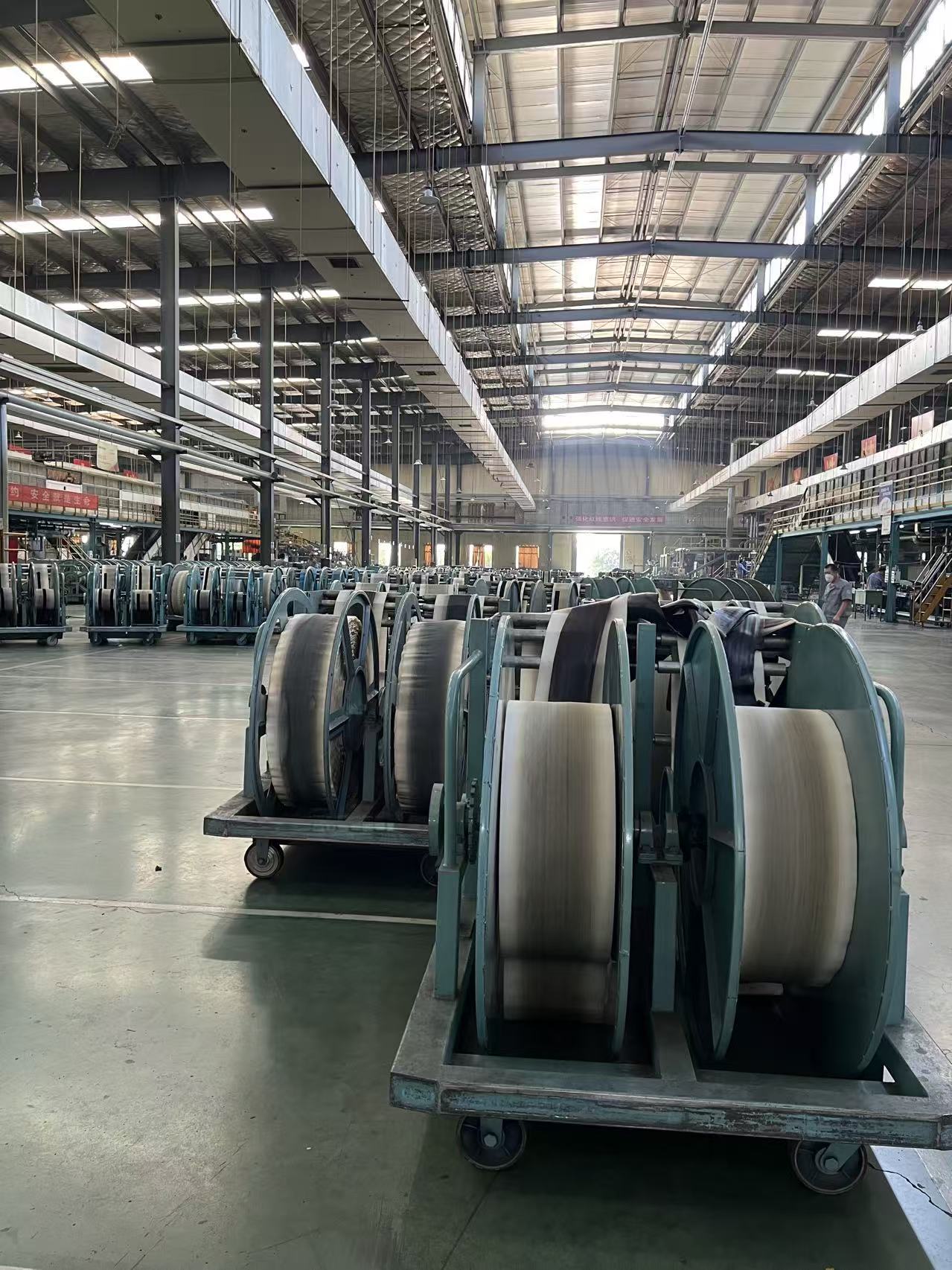
Quality control at this manufacturer follows 100% test standards for all products. The value of that sentence depends entirely on the definition behind it: 100% of what, tested against which parameter, recorded where, and retained for how long. Push for the inspection record structure and a sample batch record before accepting the statement.
Failure prevention is the other half of the quality conversation. The manufacturer's own risk documentation names sidewall knots — bulging caused by cord breakage on pothole impact — as a controlled risk, addressed by a 5 mm thicker sidewall, with countermeasures that combine quality testing and customer usage training. A factory able to name its main field failure mode, the design change that addresses it, and the test that verifies the change has thought past the sample stage.
5. Certification and market access
Certification is the dimension where buying teams most often accept a logo in place of a document. Wideway's declared certifications are ECE, DOT, GCC and REACH — covering ECE type approval, the United States framework, the Gulf region and EU chemical compliance. Verify by document: the approval number per product family, the DOT plant identifier, and the applicable GB 9743 conformity where the Chinese market matters to your program.
Then confirm ownership. Distributors running a private label program need to know which party holds the approval and what has to be completed before a new brand name appears on the sidewall. Resolving that at evaluation stage is inexpensive; resolving it after the first container is loaded is not.
6. Commercial execution: MOQ, capacity, lead time and after-sales
Commercial terms are part of capability, because a factory that cannot schedule your order cannot supply you. The figures to obtain in writing are concrete: a minimum order quantity of one 20-foot container, approximately 400–700 pieces; a typical production lead time of 25–45 days; a declared monthly production capacity of 60,000 pieces; delivery terms of FOB Qingdao; payment terms of 30% T/T as deposit with 70% T/T against a copy of the bill of lading; and acceptance criteria combining a pre-shipment test with third-party inspection (BV).
After-sales terms belong on the same page as the specification. The manufacturer provides after-sales tire quality warranty support and custom promotional accessories. For a distributor, promotional accessories reduce the real cost of launching a private label, and they should be specified at the same time as the price rather than negotiated afterwards.
Step-by-Step: A Seven-Step Evaluation Sequence
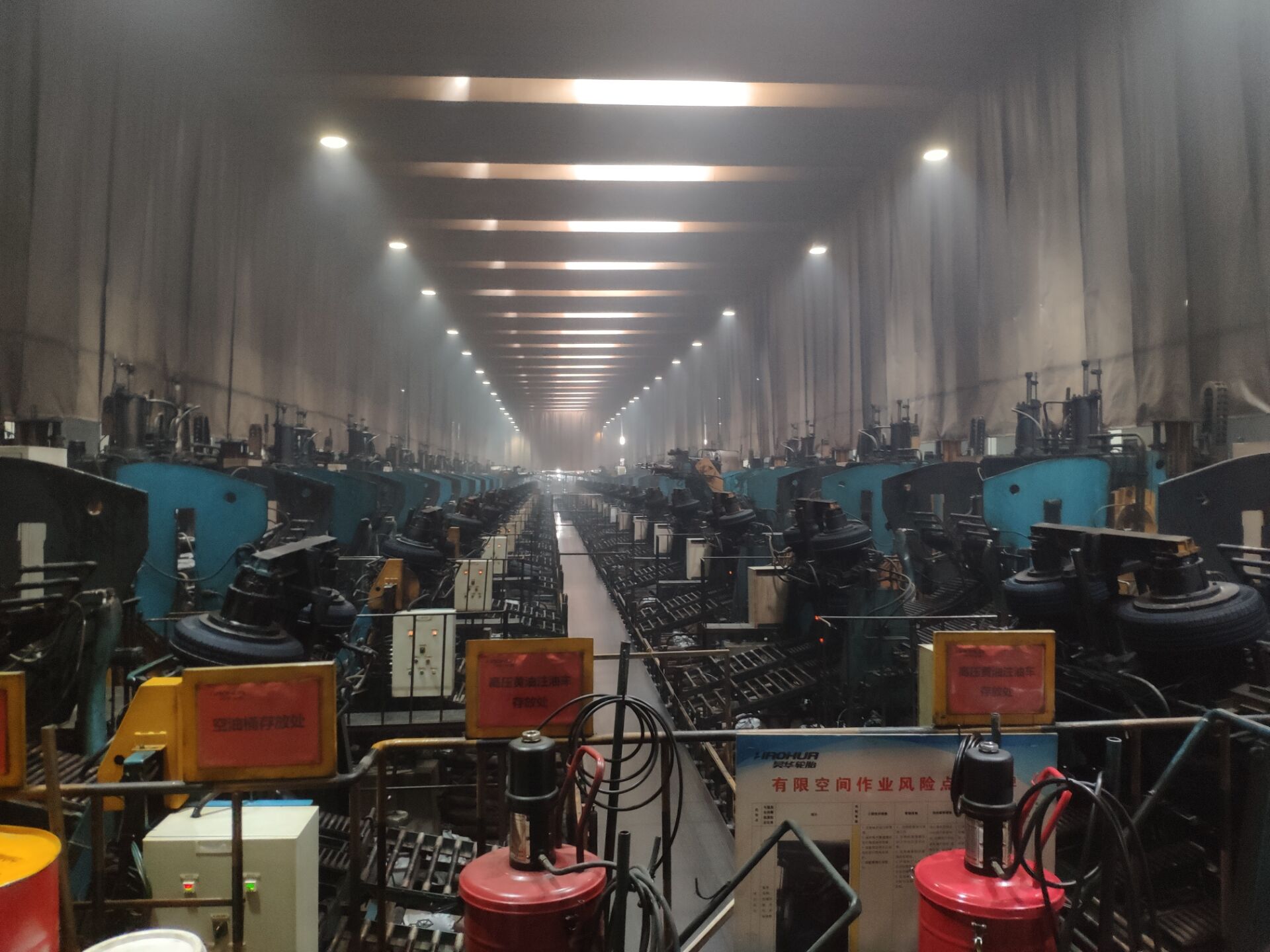
The order matters. Steps 1 and 2 filter out most unsuitable factories before you spend money on testing.
- Define the designation list and the target markets. Write down the sizes your market sells — including small reinforced family sizes, mainstream metric sizes such as 195/65R15, and any low-profile ZR-rated sizes such as 215/45ZR17 — plus the destination countries. This document becomes the benchmark every later question is measured against.
- Request certification and test documentation. Ask for approval numbers per product family, the plant identifier, and the market-access frameworks covered. Match them against the destination list from step 1.
- Validate material and construction inputs. Ask how tread and sidewall compounds are controlled, how carcass cord and sidewall reinforcement are sourced, and what construction differences exist against traditional tire pattern and construction design. Compare the answers with what the sample later shows.
- Benchmark on the mainstream size. Take one high-volume size as your reference SKU and check load index, speed rating, dimension tolerance and weight consistency. A factory that is precise on the mainstream size is usually precise elsewhere.
- Confirm capacity, MOQ and lead time in writing. Match the declared 60,000-piece monthly capacity and the 25–45 day lead time against your replenishment calendar, and test the one-container MOQ against your intended SKU count.
- Validate samples and set acceptance criteria. Define the pre-shipment test and third-party inspection before the order, not after a dispute. A named third party such as BV removes ambiguity about who decides pass or fail.
- Lock commercial and after-sales terms. Delivery terms, payment terms (30% deposit, 70% against bill of lading copy), warranty scope and promotional accessories belong in the same document as the specification.
| Evaluation step | Document or evidence to request | What a strong answer looks like |
|---|---|---|
| Portfolio coverage | Designation list with declared load index and speed rating per SKU | Coverage across small reinforced sizes (e.g. 145R12C), mainstream metric sizes (e.g. 195/65R15) and low-profile ZR-rated sizes (e.g. 215/45ZR17), plus seasonal and white letter / white wall constructions. |
| Certification | Approval number per product family and DOT plant identifier | Declared ECE, DOT, GCC and REACH certification traceable to documents, aligned to UN R30, UN R117, FMVSS No. 139, UTQG and GB 9743 as applicable. |
| Material and construction | Compound, cord and sidewall reinforcement control description | Documented construction differences against traditional pattern and construction design, including +5 mm thicker sidewall reinforcement and a +3% wider contact patch. |
| Quality control | Inspection record structure and a sample batch record | 100% test standards applied to all products, with the definition of what is tested, recorded and retained stated in writing. |
| Commercial execution | Written MOQ, lead time, delivery and payment terms | One 20-foot container MOQ (approx. 400–700 pieces), 25–45 day lead time, 60,000 pieces monthly capacity, FOB Qingdao, 30% deposit with 70% against B/L copy. |
| After-sales | Warranty scope and promotional support list | Tire quality warranty support and custom promotional accessories confirmed before the first order. |
Three Scenarios Where This Framework Decides the Outcome
Scenario 1: A private label launch into a hot-climate market
Here the evaluation is not about novelty; it is about heat and documentation. A distributor launching its own brand into a market such as Saudi Arabia needs the compound and construction conversation to be explicit, and V-RICH tires are positioned exactly around durability in hot climate conditions. Ask how the factory validates temperature-driven performance, and connect that to UTQG temperature grading and UN Regulation No. 117 data. Combine it with the commercial terms — one container MOQ, 25–45 day lead time, warranty scope — and a launch plan becomes financeable rather than speculative.
Scenario 2: An urban fleet or taxi replenishment program
Fleet and taxi supply is dominated by cadence, not by hero products. The questions that matter are how tightly the factory holds load index on the small reinforced sizes that light commercial vehicles use, whether the mainstream size used by the local parc is well supported, and how reliably a 60,000-piece monthly capacity converts into a repeatable 25–45 day lead time across the year. In this scenario, a distributor that verified the acceptance criteria — pre-shipment test plus third-party inspection — protects the customer relationship as much as its own margin.
Scenario 3: A performance-oriented program for tuning and UHP channels
The third scenario tests portfolio depth rather than volume stability. Low-profile ZR-rated sizes demand mold precision and compound control at a different level from mainstream sizes, and the manufacturer's reinforced construction comparison provides the numbers to discuss: +22% grip and driving stability, a +5 mm sidewall reinforcement, and +40% total tire lifespan against traditional tire pattern and construction design. The cost side of the same comparison — 10% higher initial cost, 40% lower total cost of ownership over three years, 90% less maintenance — is exactly the value proposition a performance-focused reseller has to defend in writing.
Comparison: Reinforced Construction vs. Traditional Pattern and Construction Design
| Parameter | Traditional tire pattern and construction design | Reinforced passenger car construction (manufacturer-reported) |
|---|---|---|
| Contact patch | Baseline reference | Tread width +3%, a wider contact patch for enhanced road contact. |
| Sidewall | Baseline reference | Tougher sidewall rubber, thicker and extended shoulder rubber, +5 mm sidewall reinforcement for impact and blowout resistance. |
| Design features | Baseline reference | Advanced deflection design and silent absorber layer. |
| Handling and safety | Baseline reference | +22% increase in grip and driving stability. |
| Durability | Baseline reference | +40% extension in total tire lifespan and safety margins; longer tread life. |
| Initial cost | Baseline reference | Initial cost 10% higher. |
| Total cost of ownership (3 years) | Baseline reference | Total cost of ownership 40% lower over three years. |
| Maintenance | Baseline reference | 90% less maintenance required. |
| Road conditions suited | Standard pattern applications | Urban road, highway road, all terrain, mud terrain, rugged road, and snow and ice road conditions. |
Note on reading this table: the figures are declared in the manufacturer's own comparison data against a traditional tire pattern and construction design baseline. Use them as the starting point for a specification discussion and as the baseline to validate against your own warranty returns, not as an independent test result.
Frequently Asked Questions
Which certifications should a passenger car tire factory hold before you place an export order?
Match certification to the destination markets in your program. For the EU, ECE type approval under UN Regulation No. 30 and the performance requirements of UN Regulation No. 117 for rolling sound emissions, wet adhesion and rolling resistance are the relevant frames, together with tyre labelling under Regulation (EU) 2020/740. For the United States, FMVSS No. 139 and UTQG treadwear, traction and temperature grading apply. For China, GB 9743 is the mandatory national standard. Shandong Wideway Tire Co., Ltd. declares ECE, DOT, GCC and REACH certification; ask for approval numbers per product family and the DOT plant identifier rather than a photograph of a certificate.
Can one factory realistically produce both small family sizes and ultra-high-performance sizes?
Yes, and that spread is a useful capability test. Designations such as 145R12C, 195/65R15 and 215/45ZR17 sit in three different construction envelopes — reinforced small diameter, mainstream metric, and low-profile high-speed — and a factory that holds tolerances across all three has the mold and compound flexibility a private label program needs. Wideway's declared range spans passenger car, SUV, AT, MT, van, RT, winter and all-season tires plus white letter and white wall constructions, backed by a declared annual passenger car radial capacity of 12 million units and a declared monthly production capacity of 60,000 pieces.
What does it cost to start, and what commercial terms should be expected?
Start with the order floor rather than the unit price. The minimum order quantity is one 20-foot container, approximately 400–700 pieces, so the first commitment is a container rather than a full production run. Delivery terms are FOB Qingdao, and payment terms are 30% T/T as deposit with 70% T/T against a copy of the bill of lading. On product cost, the manufacturer's construction comparison reports an initial cost 10% higher for reinforced construction against traditional tire pattern and construction design, with total cost of ownership 40% lower over three years — a trade-off worth testing against your own field returns.
How are samples and acceptance criteria handled?
Acceptance criteria combine a pre-shipment test with third-party inspection (BV), which removes ambiguity about who determines pass or fail. Request a sample in your reference size — 195/65R15 is a practical mainstream benchmark — together with the declared load index and speed rating for each SKU, and confirm the inspection scope in writing before production begins. Quality control follows 100% test standards, so ask what those records contain for the batch that produced your sample.
What lead time and after-sales support should a distributor expect?
Typical production lead time is 25–45 days with a declared monthly production capacity of 60,000 pieces, so the practical planning question is how your replenishment calendar maps onto that window during peak season. After-sales support includes tire quality warranty support and custom promotional accessories for private label launches. To move from evaluation to execution, download the passenger car tire catalogue and send your designation list and target markets to the export team for a sample and a quotation.
Conclusion: Turn the Evaluation Into a Repeatable Process
Evaluating a passenger car tire factory is not a one-off visit. It is a repeatable process built on six verifiable dimensions — designation coverage, load index and speed rating control, material and construction inputs, quality-control testing, certification for your target markets, and commercial execution — and it produces a document set you can re-check on every reorder.
Used properly, the framework also protects the factory relationship. Distributors who arrive with a defined designation list, a reference size and written acceptance criteria get faster, more accurate answers than those who ask whether the factory can 'make good tires'. The same evidence package supports a long-term supply agreement, because both sides are measuring the same things: the mainstream size as a benchmark, the small reinforced and low-profile ZR sizes as the range edges, and the materials, tests and certifications as the constant.

Next step: request the sample and the specification sheet
The fastest way to test this framework is to request a sample together with the specification sheet for your reference size. WIDEWAY, EVERLAND and V-RICH supply through Shandong Wideway Tire Co., Ltd., whose export team can answer the designation, certification, MOQ, lead time and after-sales questions in this guide directly.
Download: EVERLAND Catalog 2025 (PDF)
Website: www.widewaytire.com
Email: della@widewaytire.com · Tel / WhatsApp: +86 18253208831
Address: No.396, Emeishan Road, HuangDao District, Qingdao City, Shandong, China
Have Questions or Need More Details?
Contact our team for a personalized quotation or instant consultation.
Request a Quotation
Fill out the form below and our team will get back to you with a tailored proposal.
WhatsApp Direct Chat
Prefer to chat in real-time? Message us on WhatsApp for instant assistance & quick answers.
- Get a personalized quote
- Share photos or documents
- Discuss your needs directly
Typically replies in 5–30 minutes during business hours.