
Off-Road Tire Partnership and Support FAQ: Working with SHANDONG WIDEWAY TIRE CO., LTD.
This FAQ answers the questions that tire dealers, auto repair shop chains, wholesalers and OEM buyers ask before committing to a long-term off-road tire supply relationship with SHANDONG WIDEWAY TIRE CO., LTD. — a tire manufacturer founded in 2014 in Qingdao, Shandong, China, operating the WIDEWAY, EVERLAND and V-RICH brands, exporting to the EU, the Middle East, Africa, Central and South America, Southeast Asia, Central Asia, Australia and Canada.
The Question Behind the Question: Why Buyers Ask About Partnership, Not Just Product
A specification sheet tells a buyer what a tire is. It does not tell them whether the same tire will arrive with the same construction eighteen months from now, whether a warranty claim will be handled, whether the certification marking will still clear customs in the destination market, or whether the container will ship when it was promised. Those are partnership questions, and for off-road tires they carry more weight than usual, because off-road tires are sold into conditions that punish weak construction and inconsistent supply.
Tire dealers, auto repair shop chains and automotive aftermarket buyers typically arrive at the Decision-to-Execution stage with a short list of open questions:
- Will the supplier still be producing the same off-road sizes and patterns next season?
- What happens when a customer reports a sidewall failure or an early wear claim?
- Is the market-specific certification paperwork handled, or is it the buyer's problem?
- What are the real minimum order quantity and payment terms, not the marketing version?
- Is there room to build a protected territory, or will the same tire appear next door?
This article answers those questions using WIDEWAY's own manufacturing, quality and commercial facts, and it separates verified third-party market data from company-specific information. Where a figure is not documented, it is not stated.
Industry Background: Where Off-Road Tires Sit in 2026
Off-road tires are not a niche add-on to the tire business; they are a distinct, growing category with its own economics. The global off-the-road (OTR) tire market was valued at approximately USD 34.4 billion in 2024, driven largely by mining and construction activity, according to Smithers. Estimates of the same market vary by research house depending on which tire classes are included — Credence Research places it at roughly USD 32.3 billion — which is a useful reminder to buyers that market-size figures should always be read with their classification method attached.
The recreational side of the category is growing faster than the industrial base. The Mud Tire (MT) segment alone reached USD 8.3 billion in 2024, with a projected CAGR of 6.1% through 2033, driven by rising off-road recreational activity, according to Credence Research. Within that growth, rugged-terrain (R/T) tires are emerging as a high-growth middle ground, taking share from traditional A/T and M/T segments for users who want aggressive aesthetics without M/T noise levels — a pattern noted in Tire Review's market insights.
Two compliance realities sit underneath all of this and shape what a distributor can actually sell:
- In the United States, all DOT-certified tires for public road use must carry a code identifying plant, batch and date (for example, DOT 4A23 1224) under FMVSS No. 119. NHS (Not for Highway Service) tires are exempt from that marking but are restricted from highway use.
- In the EU, the Three-Peak Mountain Snowflake (3PMSF) symbol has been a mandatory requirement for winter tires in Germany (since October 2024) and Sweden (since November 2024) under ECE R117. In Saudi Arabia, SASO certification is mandatory for all tires exported into the market.
Into that environment, SHANDONG WIDEWAY TIRE CO., LTD. is a Qingdao-based tire manufacturer that has been producing tires since 2014 — twelve years of manufacturing continuity — and operates the WIDEWAY, EVERLAND and V-RICH brands across passenger car, SUV, AT, MT, RT, van, winter and all-season tire lines, including white letter and white wall variants. The company reports an export ratio of approximately 70%, a 25-member product R&D team, and around 5,000 employees.
What WIDEWAY's Partnership and Support Model Actually Includes
Long-term supply is built from four things that can be inspected rather than promised: production capacity, product construction, material traceability, and defined commercial and after-sales terms. WIDEWAY documents all four.
1. Production capacity that supports repeat ordering
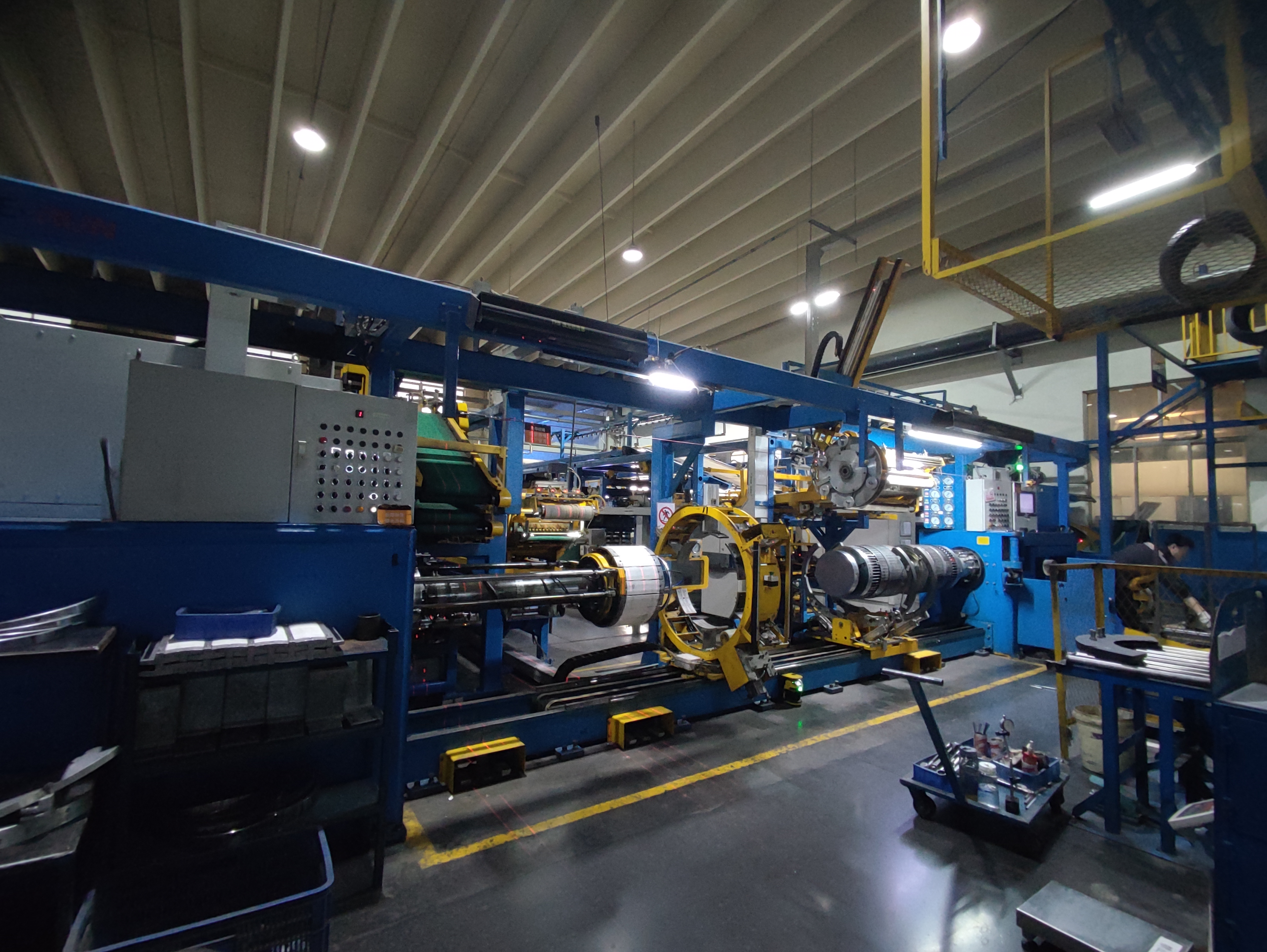
Monthly production capacity is 60,000 pieces, and quality control covers 100% testing of all tires. For a distributor, the practical meaning is that a reorder does not depend on leftover inventory: capacity exists to plan a season, not just a shipment. Export coverage spans the EU, Middle East, Africa, Central and South America, Southeast Asia, Central Asia, Australia and Canada — the same regions where a dealer network is likely to need documentation, packaging and marking adapted to local rules.
2. Reinforced construction and what it means for claims
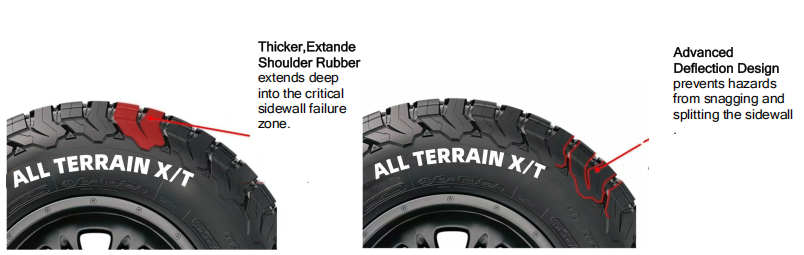
The most common after-sales complaint in the off-road category is not tread wear; it is sidewall damage. WIDEWAY's reinforced off-road construction responds to that directly with a 5 mm thicker sidewall, tougher sidewall rubber, extended shoulder rubber, an advanced deflection design and a silent absorber layer. The stated purpose of the thicker sidewall is specific: it reduces the risk of sidewall bulging caused by cord breakage when a tire hits a pothole.
Two further figures matter to a dealer's margin math. Against a traditional tire pattern and construction design, WIDEWAY documents a 3% wider tread contact patch, a 22% increase in grip and driving stability, and a 40% extension in total tire lifespan and safety margins. The commercial trade-off is stated openly rather than hidden: initial cost is 10% higher, while total cost of ownership is documented as 40% lower over three years, with 90% less maintenance required. Buyers who sell on total cost of ownership rather than sticker price have a defensible argument; buyers who sell on lowest unit price should know that this is not the positioning.
3. Material traceability across five input categories
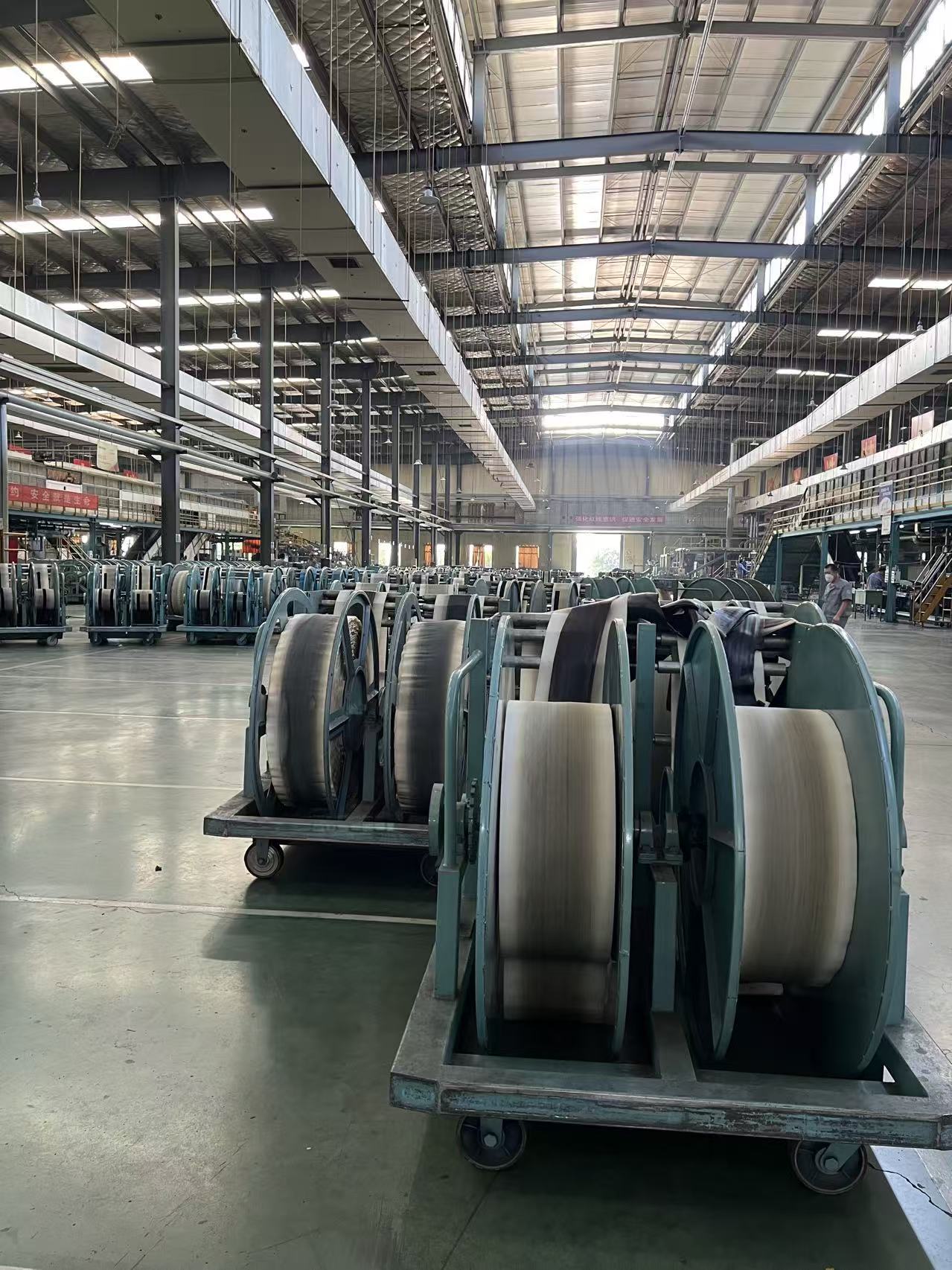
Traceability means being able to answer, for a given production batch, which material categories went into the tire and how they were handled. WIDEWAY's off-road tires are built from five documented input categories:
- Natural rubber — typically contributes elasticity and grip behaviour in the tread compound.
- Synthetic rubber — generally used to balance heat resistance and wear performance within the compound.
- Steel cord — provides carcass and belt reinforcement for load stability and sidewall strength.
- Polyester cord fabric — typically forms part of the carcass body.
- Nylon cord fabric — generally used as a cap ply, where dimensional stability under speed matters.
That last point connects directly to the high-speed stability question that distributors ask about LT-metric and SUV-sized off-road tires: at highway speed, a tire's shape is held by its cord and belt package, so the consistency of the cord fabric supply is a stability issue, not a paperwork issue.
4. Defined commercial terms, after-sales support and brand rights
WIDEWAY's documented purchasing terms remove the ambiguity that slows down a first order:
MOQ: one 20-foot container. Delivery terms: FOB Qingdao. Acceptance criteria: pre-shipment test plus third-party inspection (BV). Payment terms: 30% T/T as deposit, with the remaining 70% T/T paid against a copy of the bill of lading.
After-sales services include tire quality warranty support and custom promotional accessories — the branded items that help a dealer move product in a showroom, not just in a warehouse. WIDEWAY also provides customer usage training, which matters in this category because a meaningful share of off-road sidewall damage comes from how the tire is driven rather than how it was built; training is a claim-prevention tool as much as a service.
On territory, the company states that exclusive distribution opportunities remain available for many countries. That is a structural advantage for a distributor willing to invest in a market, and a structural limitation for a buyer hoping to protect a territory that is already taken — worth confirming in writing at the enquiry stage rather than after the first container.
Step-by-Step Breakdown: How an Off-Road Tire Partnership Is Set Up
The process below reflects WIDEWAY's documented commercial and quality terms. It is written from the buyer's side, because every step is a point where a distributor should be collecting evidence.
- Define the requirement before the quotation. Specify which terrain types the program must cover — mountain, desert and rock, mud, winter snow, or mixed all-weather use — and which markets the tires will be sold into. Market determines compliance: DOT/FMVSS No. 119 marking for the United States, SASO for Saudi Arabia, 3PMSF under ECE R117 where winter tires are sold in Germany or Sweden.
- Match the requirement to the brand and product line. WIDEWAY's portfolio covers AT, MT, RT, winter, all-season, SUV, van, passenger car and white letter/white wall lines across three brands (WIDEWAY, EVERLAND, V-RICH). Using one brand for a premium tier and another for a volume tier is a positioning decision, not a production constraint.
- Confirm commercial terms up front. MOQ is one 20-foot container, delivery is FOB Qingdao, and payment is 30% T/T deposit with 70% T/T against a copy of the B/L. Mixed-size containers should be discussed at this stage, since the MOQ is defined by container, not by size.
- Agree the acceptance criteria. Pre-shipment testing plus third-party inspection (BV) are the documented acceptance steps. A distributor who wants the inspection report as a standing document should say so in the order confirmation, not after loading.
- Lock the build specification. The reinforced sidewall specification — 5 mm thicker sidewall, tougher sidewall rubber, extended shoulder rubber, advanced deflection design, silent absorber — is the difference between this program and a general-purpose tire. If a market needs the thicker sidewall on a particular size, that is part of the specification conversation.
- Production and 100% testing. Quality control covers 100% testing of all tires. That is the quality gate that sits between the order and the loading photograph.
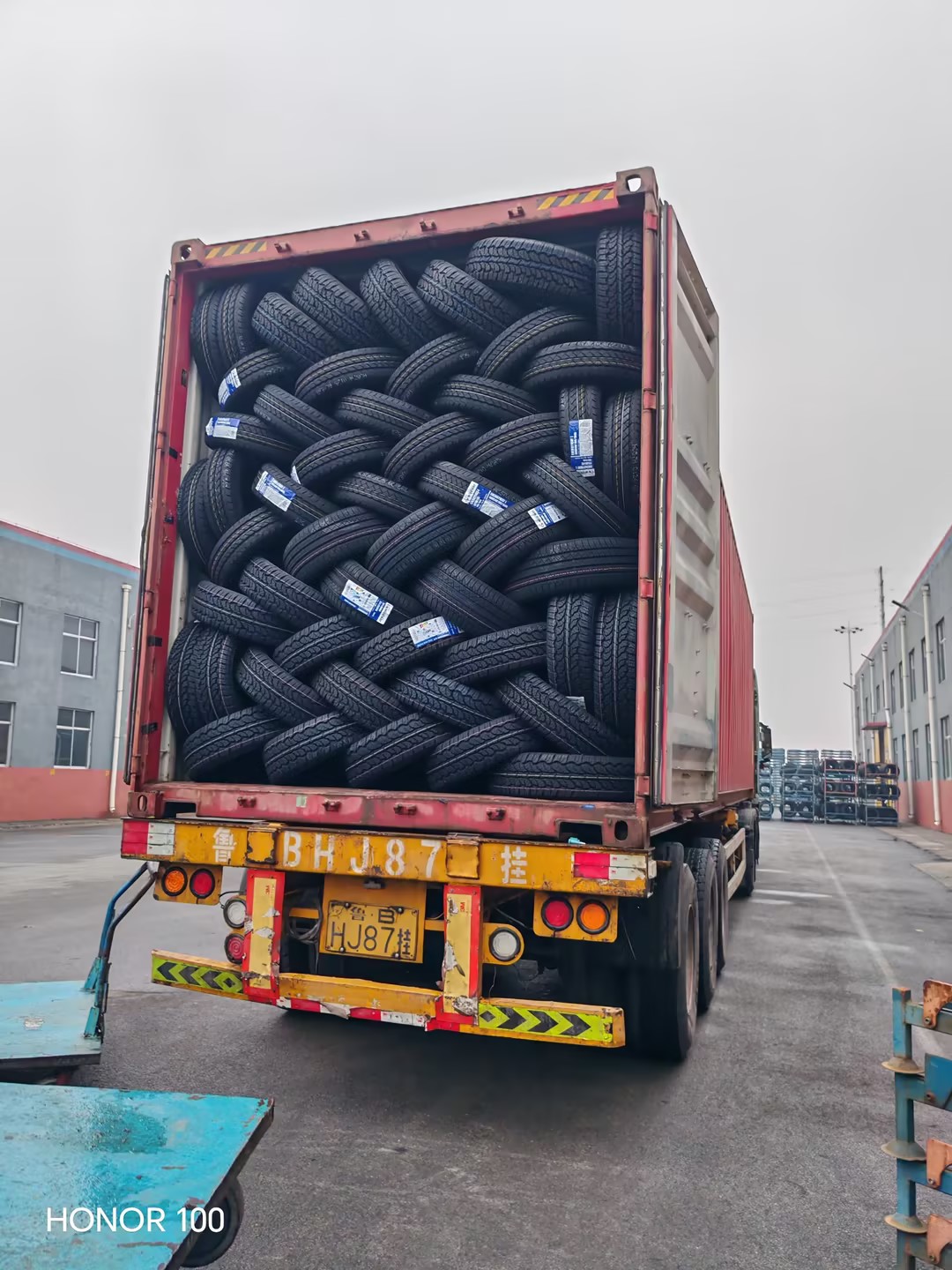
- Shipment, packing and documentation. Loading and packing are handled for export, with documentation aligned to the destination market.
- After-sales and repeat ordering. Warranty support, promotional accessories and usage training run on the sales side; on the supply side, 60,000 pieces of monthly capacity supports seasonal repeat programs rather than one-off orders.

Use Cases: Who This Partnership Model Fits — and Who It Does Not
The partnership model is not universal. It fits buyers whose economics depend on repeat purchase, and it fits poorly with buyers who treat tires as a one-off spot trade.
Regional tire distributors and wholesalers
This is the core audience. A distributor carrying an off-road line needs sizing depth (including LT-metric sizes such as LT285/70R17), consistent construction between batches, and a brand they can protect. The combination of AT, MT, RT, winter and all-season lines under three brands gives a distributor room to build tiers within one supply relationship, while documented 100% testing and a 60,000-piece monthly capacity make seasonal planning realistic. Where a country is still open, the documented availability of exclusive distribution rights is the deciding factor.
Auto repair shop chains and automotive aftermarket buyers
Repair chains sell off-road tires to customers who return with complaints when a tire fails. A 5 mm thicker sidewall and reinforced shoulder are claim-reduction features, and warranty support plus usage training addresses the behaviour side of the same problem. For an aftermarket buyer, the 3-year total cost of ownership position — documented as 40% lower despite a 10% higher initial cost, with 90% less maintenance required — is easier to defend to a fleet customer than a discount claim.
OEM, private-label and brand-owner programs
Brand owners and OEM buyers who need a manufacturer behind a house brand should note the portfolio breadth: passenger car, SUV, AT, MT, RT, van, winter, all-season, white letter and white wall tires, produced under a 25-member R&D team. The commercial gate is the container-based MOQ, which suits a genuine program and screens out sample-level trading.
Where the fit is weaker
Buyers whose only criterion is the lowest possible unit price, or who need immediate small-quantity shipments below one 20-foot container, will find the documented terms restrictive. That is a deliberate boundary, not a gap: the pricing model is built around total cost of ownership over three years and around a supply relationship that survives more than one season.
Comparison Table: Reinforced Off-Road Construction vs. Traditional Tire Pattern and Construction Design
The table below reproduces WIDEWAY's documented comparison figures against a traditional tire pattern and construction design. It is company-supplied performance data, and it is presented with the cost trade-off intact so buyers can judge it rather than simply accept it.
| Comparison metric | WIDEWAY reinforced off-road construction | Traditional tire pattern and construction design |
|---|---|---|
| Tread contact patch | 3% wider contact patch, for enhanced road contact | Baseline |
| Sidewall reinforcement | 5 mm thicker sidewall, for maximum impact and blowout resistance | Baseline |
| Handling and safety | 22% increase in grip and driving stability | Baseline |
| Durability | 40% extension in total tire lifespan and safety margins | Baseline |
| Design features | Tougher sidewall rubber, extended shoulder rubber, advanced deflection design, silent absorber | Conventional pattern and construction |
| Initial cost | 10% higher | Lower initial outlay |
| Total cost of ownership (3 years) | 40% lower | Baseline |
| Maintenance demand | 90% less maintenance required | Baseline |
WIDEWAY positions this construction for urban road, highway, all-terrain, mud terrain, rugged road, and snow and ice conditions. The trade-off is explicit: a buyer who needs the lowest entry price per unit is not the target customer for this build, while a buyer selling reliability, fleet uptime or reduced claim rates is.
Frequently Asked Questions
What compliance requirements should a distributor verify before ordering off-road tires?
Compliance depends on the destination market, not on how aggressive the tire looks. In the United States, all DOT-certified tires for public road use must carry a code identifying plant, batch and date (for example, DOT 4A23 1224) under FMVSS No. 119, while NHS tires are exempt from that marking but restricted from highway use. In the EU, the Three-Peak Mountain Snowflake (3PMSF) symbol has been mandatory for winter tires in Germany since October 2024 and in Sweden since November 2024, under ECE R117. Saudi Arabia requires SASO certification for all tire imports. Because WIDEWAY exports to the EU, Middle East, Africa, Central and South America, Southeast Asia, Central Asia, Australia and Canada, market-specific documentation should be confirmed at the enquiry stage rather than assumed.
How does WIDEWAY handle after-sales support and quality claims?
Quality control covers 100% testing of all tires, and after-sales services include tire quality warranty support together with custom promotional accessories for distributors. WIDEWAY also provides customer usage training. That training matters because sidewall damage in off-road use is frequently caused by impact — hitting a pothole, for example — rather than by a manufacturing defect. The reinforced construction addresses part of the same risk mechanically: a 5 mm thicker sidewall reduces the risk of sidewall bulging caused by cord breakage.
What are the minimum order quantity, delivery terms and payment terms?
The minimum order quantity is one 20-foot container. Delivery terms are FOB Qingdao. Payment terms are 30% T/T as a deposit, with the remaining 70% T/T paid against a copy of the bill of lading. Because the MOQ is defined by container rather than by individual size, mixed-size containers are a commercial conversation to hold before the order is confirmed.
What inspection and acceptance steps apply before shipment?
The documented acceptance criteria are a pre-shipment test combined with third-party inspection by BV. These sit alongside WIDEWAY's own quality control, which covers 100% testing of all tires. For a distributor who needs the inspection documentation to satisfy a customer or an importer, the requirement should be written into the order confirmation so that it is part of the shipment plan rather than a request made after loading.
How does WIDEWAY support supply continuity for repeat orders and long-term programs?
Monthly production capacity is 60,000 pieces and quality control covers 100% testing of all tires, which is what allows a seasonal reorder program to be planned rather than improvised. The manufacturer has been producing tires since 2014, operates the WIDEWAY, EVERLAND and V-RICH brands, and reports an export ratio of approximately 70% across the EU, Middle East, Africa, Central and South America, Southeast Asia, Central Asia, Australia and Canada. The company also states that exclusive distribution opportunities remain available for many countries, which is relevant to any distributor planning a multi-year commitment. To review the full line before opening that conversation, the current catalog is available here: EVERLAND CATALOG 2025.
Conclusion: What a Dependable Off-Road Tire Partnership Looks Like
A dependable off-road tire supply relationship is defined by what can be verified: a manufacturer that has been producing since 2014, a documented 60,000-piece monthly capacity, 100% testing of all tires, a 5 mm thicker reinforced sidewall aimed squarely at the category's most common failure mode, traceable inputs across natural rubber, synthetic rubber, steel cord, polyester cord fabric and nylon cord fabric, clearly stated MOQ and payment terms, and after-sales support that includes warranty backing, promotional accessories and usage training.
The cost structure is worth repeating because it is the part buyers most often skip: a 10% higher initial cost against a documented 40% lower total cost of ownership over three years, with 90% less maintenance required. That is a claim a distributor can test against their own claim rate, and it is the honest basis on which to decide whether this partnership model fits a given market.
Next Step: Request the Catalog or Discuss Distribution
Buyers evaluating an off-road tire program can request the full product catalog or open a distribution conversation directly with WIDEWAY.
SHANDONG WIDEWAY TIRE CO., LTD.
No.396, Emeishan Road, HuangDao District, Qingdao City, Shandong, China
Website: www.widewaytire.com
Contact: Della — della@widewaytire.com — Tel/WhatsApp: +86 18253208831
Catalog download: EVERLAND CATALOG 2025 (PDF)
Have Questions or Need More Details?
Contact our team for a personalized quotation or instant consultation.
Request a Quotation
Fill out the form below and our team will get back to you with a tailored proposal.
WhatsApp Direct Chat
Prefer to chat in real-time? Message us on WhatsApp for instant assistance & quick answers.
- Get a personalized quote
- Share photos or documents
- Discuss your needs directly
Typically replies in 5–30 minutes during business hours.