
Off-Road Tire OEM Evaluation: Matching Terrain-Specific Capability to Distributor Requirements
Off-Road Tire OEM Evaluation: Matching Terrain-Specific Capability to Distributor Requirements
Before signing a supply agreement, importers and distributors need more than a catalog. They need to know whether a manufacturer can consistently produce the specific off-road tire categories their regional market actually consumes: mud, rugged terrain, all-terrain, sand and hot-climate patterns, reinforced sidewall construction, and certifiable winter-rated product. The evaluation should be capability-first, not brand-claim-first.
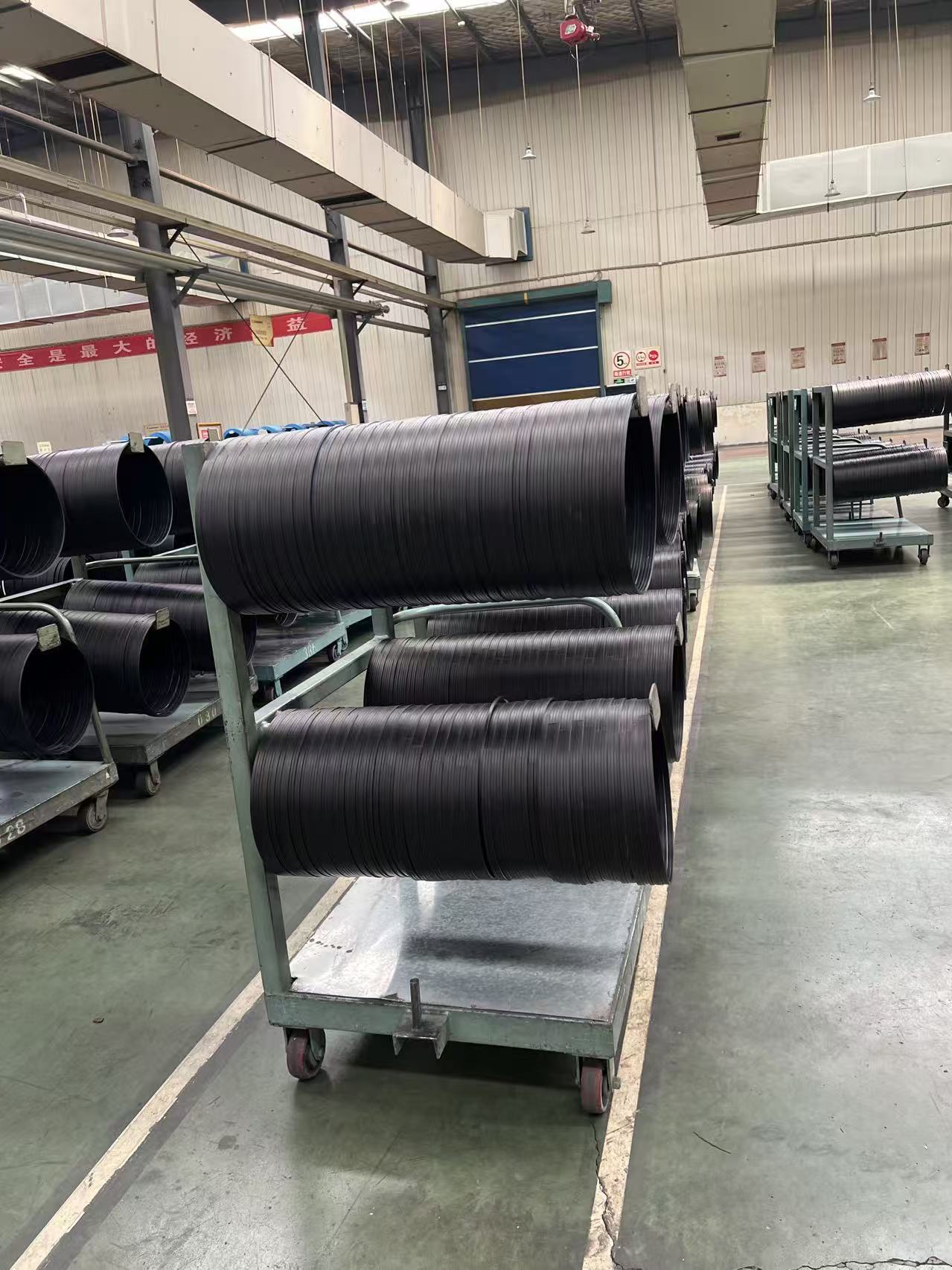
Off-road tire sidewall steel material is one of the inputs used in reinforced sidewall construction.
What Buyers Should Verify in an Off-Road Tire OEM Partner
An off-road tire supplier evaluation differs from a passenger car tire discussion. The requirements are sharper: load capacity under low pressure, sidewall resistance against cuts and impacts, compound behavior in heat, and pattern self-cleaning in mud or snow. A distributor serving multiple terrains needs a manufacturer that can deliver distinct pattern families from one production and quality system, not a single “general-purpose” design stretched beyond its working range.
Within the WIDEWAY, EVERLAND, and V-RICH brand system, off-road tire models are grouped into differentiated categories. The distinction matters because each category resolves a different regional buying need. A sand-and-hot-climate pattern is not the same product as a winter-rated or mud-terrain pattern, even if both fall under the broad “off-road tire” label.
Mapping Terrain Requirements to Tire Categories
The most practical way to structure a distributor evaluation is to begin with the terrain and duty cycle, then map those conditions to a tire category, and finally confirm the supplier has production capability within that category. The table below summarizes the off-road tire categories present in the manufacturer’s product structure.
| Off-Road Tire Category | Primary Use Pattern | Characteristic Design Focus | Relevant Market Signal |
|---|---|---|---|
| All Terrain Off-Road Tire / 4x4 AT | Mixed on-highway and off-highway use | Balanced traction, on-road stability, broader road-use compatibility | Core volume for distributors carrying everyday replacement demand |
| Rugged Terrain Off-Road Tire / 4x4 RT | Aggressive aesthetics with more road manners than MT | Reinforced sidewall emphasis, tougher visual and structural block | Growing replacement segment between AT and MT |
| Mud Terrain Off-Road Tire / 4x4 MT | Deep mud, loose soil, technical off-road conditions | Open, self-cleaning tread block design | Recreational and agricultural-adjacent demand |
| Sand Dunes & Hot Climates Off-Road Tire | Desert, high-temperature, soft-sand operation | Heat-tolerant compound direction, flotation-oriented footprint | Middle East, North Africa, and similar hot-climate markets |
Each category is not a marketing synonym for the same product. They are distinct pattern and construction directions. A distributor evaluating an OEM partner should therefore ask not “do you make off-road tires?” but “which off-road categories can you produce in which sizes, and under which certifications?”
Capability Dimensions Beyond the Tread Pattern
Pattern choice is the visible layer. The more important OEM evaluation points sit below the surface.
1. Sidewall and Casing Construction
For rugged terrain and rock-prone applications, sidewall integrity often determines real-world failure rate more than tread depth does. The manufacturer’s rugged terrain category includes reinforced sidewall off-road positioning, where the design brief moves beyond appearance toward impact and cut resistance expectations. Buyers should confirm whether the sidewall reinforcement claim is a documented construction specification or only a visual description.
2. Load Index and Pressure Scope
Off-road tires are frequently run at reduced pressure for traction. Load index and maximum pressure values therefore need to be read together. For example, the manufacturer’s all-terrain off-road category lists maximum pressure values such as 300 KPA, 550 KPA, or 350 KPA depending on the specific line and size. A distributor serving mixed commercial and recreational users should verify which load index range matches the vehicles in the target market, especially for LT-metric and floatation sizes.
3. Size Coverage and LT / Floatation Availability
One of the practical constraints in off-road distribution is size coverage. The relevant model lists include LT-metric sizes such as LT265/70R17, LT285/70R17, LT315/70R17, LT265/75R16, and floatation sizes such as 31×10.50R15LT, 33×12.50R17LT, 35×12.50R17LT, and 37×12.50R20LT. A distributor should compare the manufacturer’s available list against the vehicle population and rim-diameter mix in the destination market. A factory that can produce a wide LT and floatation range reduces the need to split sourcing across multiple suppliers.
4. Certification and Market Access
Off-road tires are not exempt from market access requirements simply because they are used off pavement. For distributors, certification can be the difference between a sellable container and a customs hold. The certification scope within the corpus includes SASO GSO Product Certification for Saudi Arabia, SONCAP for Nigeria, ECE and EU Regulation No. 117 E-mark for EU and Africa, and CCC for the Chinese mainland and Ecuador market. The scope language explicitly includes OFF-ROAD TIRE and AT MT RT tire categories in several of these documents. That documented scope is more useful than a generic statement that “certificates are available.”
Why OEM Capability Should Precede Volume Discussion
Volume is the wrong first filter. A manufacturer can quote a container price for an off-road tire program without having the production flexibility to hold the required pattern mix, sidewall specification, or marking requirements. Evaluating OEM capability first changes the negotiation structure.
The production basis includes OEM mode, with customization covering passenger car tires, off-road tires, white letter tires, and white sidewall tires. Monthly capacity is stated as 60,000 pieces for the relevant OEM program, with a lead time of 25–45 days and an MOQ of one 20-foot container, approximately 400–700 pieces depending on size and tire type. Those numbers give a distributor a planning envelope: what is the minimum program size, how long does a replenishment cycle take, and what flexibility exists for white letter or white sidewall customization.
For a distributor, OEM capability also affects brand-building. If the local market rewards a house brand or sub-brand identity, the ability to produce white letter or white sidewall off-road tires under a controlled brand format becomes a commercial advantage, not just a cosmetic option.
Step-by-Step Evaluation Framework
For buyers moving from Evaluation to Execution, the following sequence helps convert a supplier conversation into a decision-ready comparison.
- Define the market terrain mix. Identify whether the dominant demand is desert, mountain, mud, mixed road, or seasonal winter use. This determines which off-road categories deserve the most weight.
- Request category-level size lists. Do not accept a single “off-road line.” Match the required categories against available LT-metric and floatation sizes.
- Verify certification scope by market. Confirm that the applicable certificate, such as SASO for Saudi Arabia or SONCAP for Nigeria, explicitly covers the off-road tire category and not only passenger car tires.
- Confirm construction specifications. Ask for load index, speed rating, maximum pressure, and sidewall construction direction for the specific line and size, not for the brand as a whole.
- Clarify OEM terms. Review MOQ, lead time, customization options, and whether white letter or white sidewall branding is available for the chosen category.
- Validate repeat-buy economics. Compare not only first cost but also replenishment lead time, container configuration, and whether the supplier can maintain pattern and marking consistency across batches.
This sequence avoids the common mistake of selecting an off-road tire partner on a single attractive price quote before confirming that the supplier can actually sustain the required category mix.
Where Off-Road Capability Meets Distribution Reality
A capability evaluation should also be read against distribution and working capital realities. The purchasing terms include FOB Qingdao delivery, payment structured as 30% T/T deposit with the balance against a copy of the bill of lading, and acceptance through pre-shipment testing or third-party inspection, including BV. For importers, pre-shipment inspection is a useful control point for off-road tires because pattern, size, marking, and sidewall condition can be verified before the cargo leaves the port.
After-sales support in the OEM program includes custom promotional accessories and after-sales tire quality warranty support. For a distributor introducing a new off-road tire brand into a market, warranty support and promotional material can reduce the cost of early-stage market education, particularly when the local buyer base still needs to distinguish between AT, RT, and MT products.
Using Regional Evidence as a Capacity Signal
One of the more useful signals in supplier evaluation is evidence of repeat volume. The manufacturer references a Mexico project in which more than 400,000 PCR tires were exported to tire distributors and wholesalers over a four-year period. The product emphasis in that project was durability, cost-effectiveness, heat resistance, and extended mileage. That is a passenger car tire reference rather than an off-road tire case, so it should not be read as a terrain-specific off-road performance claim. However, it does provide a signal about the manufacturer’s ability to sustain multi-year export volume and repeat-order relationships with distributors.
For an off-road tire buyer, the more relevant question remains whether the supplier can repeat that behavior for AT, RT, or MT programs, including the specific sizes and certifications required by the market. The Mexico example is therefore best used as a capacity and reliability indicator, not as proof of off-road performance.
Comparison Structure for Distributor Decision-Making
The table below organizes the evaluation factors a distributor should compare across candidate suppliers. This is not a ranking of brands; it is a decision structure built from the facts available in the manufacturer’s documented production and certification scope.
| Evaluation Factor | What to Check | Why It Matters for Off-Road Distribution |
|---|---|---|
| Category Coverage | AT, RT, MT, and sand/hot-climate categories | Reduces need to source multiple suppliers for one market |
| Size Range | LT-metric and floatation sizes from 15–22 inches and above | Aligns with light truck and modified 4x4 vehicle population |
| Sidewall Construction | Reinforced sidewall in rugged terrain lines | Affects cut and impact performance in rock and trail use |
| Load and Speed Specifications | Load index, speed rating, max pressure for specific sizes | Determines legal and practical fitment range |
| Market Certifications | SASO, SONCAP, ECE/R117, CCC coverage for off-road tires | Controls customs clearance and sellable market access |
| OEM Terms | MOQ, lead time, white letter/white sidewall customization | Shapes inventory planning and brand differentiation |
| Order Control | Pre-shipment inspection, payment terms, warranty support | Reduces first-batch quality and payment risk |
Frequently Asked Questions
Conclusion
An off-road tire OEM decision should be built on category fit, size coverage, certification scope, and construction consistency, not on a single broad performance claim. For distributors serving multiple terrains, the practical advantage comes from a manufacturer that can produce differentiated AT, RT, MT, and hot-climate products within one quality and production system, while offering the customization and order controls required for long-term market development. The task is to verify those capabilities in writing before the first container is booked, because once a distributor commits to a brand and a pattern mix, switching costs are high and consistency matters more than the initial quote.
For a more detailed look at the off-road tire range and specification direction, download the official product catalog:
Have Questions or Need More Details?
Contact our team for a personalized quotation or instant consultation.
Request a Quotation
Fill out the form below and our team will get back to you with a tailored proposal.
WhatsApp Direct Chat
Prefer to chat in real-time? Message us on WhatsApp for instant assistance & quick answers.
- Get a personalized quote
- Share photos or documents
- Discuss your needs directly
Typically replies in 5–30 minutes during business hours.