
Long-Term Passenger Car Tire Partnerships: Distributor FAQ on Models, Specs and After-Sales Support
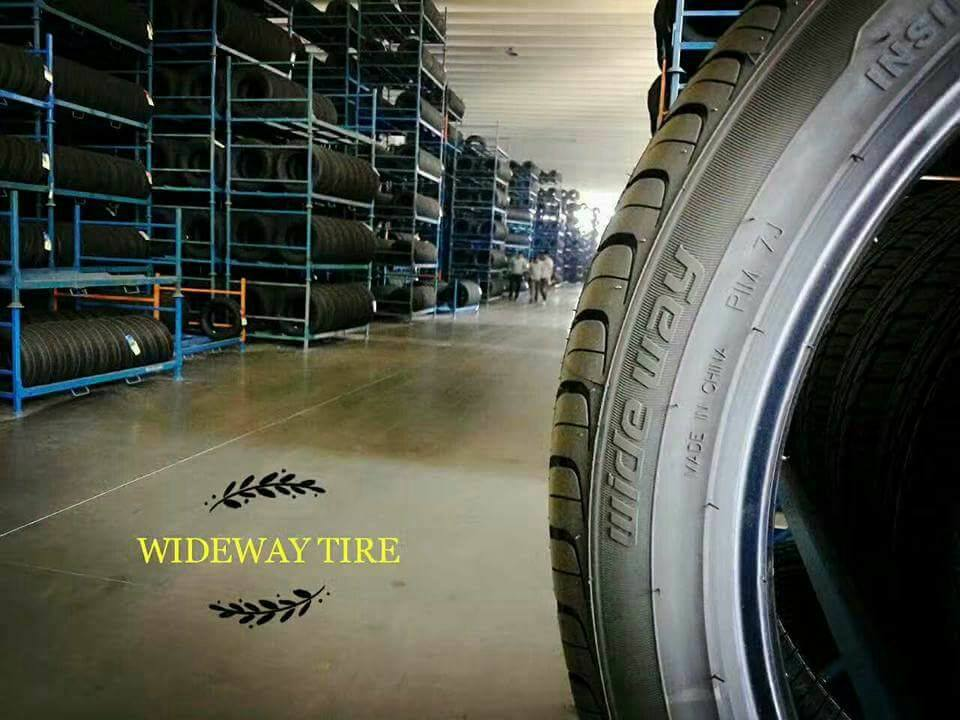
Warehouse stock staged for distributor programs. A long-term passenger car tire partnership is judged on whether the same size and specification can be reordered years later.
Distributors, wholesalers and auto repair chains rarely lose money on their first container of passenger car tires. The losses appear on the second and third order — when part of the size mix does not sell, when a load index turns out to be too low for the vans in that market, or when a technical question takes three weeks to answer.
That is why the decision that matters is not which supplier quotes the lowest unit price this quarter, but which supplier can still deliver the same model, the same specification and the same support process three years from now. This article is written as a distributor FAQ for that decision. It covers the models most often requested — 155R12C, 5.00R12 ULT, 195/65R15, 205/55R16 and 235/55ZR19 — the specifications that decide whether a size actually sells, the documented materials behind the construction, and what after-sales support can realistically be relied on.
A Partnership Is a Supply-Continuity Decision, Not a Price Decision
A single order is a transaction. A partnership is a forecast, and the forecast has to hold on four points: the same size can be reordered, the specification does not drift between batches, the material and construction behind the tire can be documented on request, and a field problem produces a written answer rather than a verbal reassurance.
Shandong Wideway Tire Co., Ltd. is a tire manufacturer founded in 2014 and based in Qingdao, Shandong, China. It produces passenger car, SUV, light truck and truck and bus radial tires under three brands — WIDEWAY, EVERLAND and V-RICH — from a 1,000,000 sqm facility with a 5,000-person workforce and a 25-person product R&D team. Roughly 70% of output is exported, with markets including Central and South America, Canada, the EU, Africa, the Middle East, Southeast Asia, Central Asia and Australia.
For a distributor evaluating that kind of program, the useful test is not a brochure. It is a list of questions with checkable answers: which sizes, which load indexes, which materials, which lead time, whose signature is on the inspection report, and who answers the phone in month eighteen.
Industry Background: Why Distributor Programs Are Getting Longer
The passenger car tire category is large enough to support long programs and fragmented enough to punish short ones. Grand View Research valued the global passenger car tire market at approximately USD 143.06 billion in 2024 and reported that the passenger car segment holds a 32.6% revenue share of the total tire market.
Supply has shifted toward export-oriented manufacturing. China's total tire exports reached 9.65 million tonnes in 2025, a 3.6% year-on-year increase, with an export value of approximately RMB 167.7 billion (about USD 23.1 billion), based on customs data reported by SunSirs.
Demand is also splitting into new categories. Precedence Research projects the global EV tire market to reach USD 337.20 billion by 2034, a 28.1% CAGR from 2025, driven by requirements for high load capacity and low noise.
The practical consequence for a distributor is that no single hero size covers a market any more. Commercial vans, urban taxis, all-season replacement demand, winter demand in northern markets and ultra-high-performance fitments pull in different directions. A multi-year program is worth more than a series of single orders because it keeps all of those categories under one specification discipline — and because switching suppliers mid-season usually costs more than the price difference being chased.
Distributor Question 1: Which Models Should Anchor a Long-Term Program?
Which passenger car tire models should a distributor stock first?
For this program, the five models most often discussed with distributors, wholesalers and repair chains are 155R12C, 5.00R12 ULT, 195/65R15, 205/55R16 and 235/55ZR19. Together they cover commercial van and urban delivery demand, high-volume passenger car replacement demand, and an ultra-high-performance size, so the stocking plan does not depend on a single vehicle segment.
The five models map to the program's use categories as follows.
| Model | Fitment logic | Category it anchors |
|---|---|---|
| 155R12C | The C suffix marks a commercial (van / light commercial) size designation. | Commercial van and urban delivery fleets |
| 5.00R12 ULT | Inch-based commercial size used on small delivery vehicles and vans. | Commercial van and urban delivery fleets |
| 195/65R15 | High-volume metric passenger car size on a 15-inch rim. | Urban road and all-season replacement demand |
| 205/55R16 | High-volume metric passenger car size on a 16-inch rim, common on mid-size sedans and hatchbacks. | Urban road, highway and all-season demand |
| 235/55ZR19 | The ZR marking denotes a high-speed-capability size designation. | Ultra-high-performance fitments |
All-season, and winter and snow, versions form part of the program's category coverage. Because availability differs by size and market, confirm the exact version against the current specification sheet before locking a seasonal stocking plan.
Two of these models deserve a note. 155R12C and 5.00R12 ULT are the sizes that keep small commercial fleets running, and they are usually the first to disappear from a distributor's shelves when a supplier changes its size mix. That is an argument for placing them at the anchor of a long-term program rather than at its edge. 235/55ZR19 sits at the other end of the range: a lower-volume, higher-value fitment where distributors want continuity of supply and consistent sidewall markings rather than a rotating cast of alternatives.
Distributor Question 2: Which Specifications Should Be Verified Before Committing?
Which specifications decide whether a size actually sells?
Four figures do most of the work: section width, load index, speed rating and maximum inflation pressure. Across the models listed above, section width runs from 184 mm to 233 mm, load index spans 91 to 106 with 104 also listed, speed ratings cover N / R / V / W, and maximum pressure ranges from 300 to 475 kPa.
| Specification | Range across the listed models | Why it decides reorder rates |
|---|---|---|
| Section width | 184–233 mm | Drives fitment clearance, contact patch and how the tire behaves under load; a width that does not match the local car parc limits which vehicles the distributor can serve. |
| Load index | 91–106 / 104 | Defines the maximum load a single tire carries at its rated inflation pressure; too low for the vehicles in the market, and returns follow. |
| Speed rating | N / R / V / W | Sets the speed capability class of the size and, indirectly, part of its construction cost. |
| Maximum pressure | 300–475 kPa | The sidewall marking for maximum cold inflation pressure; higher values in this band generally sit alongside higher load indexes and commercial van sizes. |
Load index is the standardized code for the maximum load a single tire can carry at its rated inflation pressure: the higher the number, the greater the capacity. Speed symbols are standardized as well — N corresponds to 140 km/h, R to 170 km/h, V to 240 km/h and W to 270 km/h. Matching the rating to the destination market and to the vehicles actually being serviced is more useful than simply ordering the highest rating available, because speed capability is one input into the construction of the tire and therefore into its price.
The maximum pressure figure should be read together with the load index rather than separately, because the two define the working envelope of the tire in a given application. A commercial van size with a high load index and a high pressure marking is doing a different job from a low-profile passenger car size, even when both sit inside the same program.
Two verification habits prevent most specification-driven returns. First, match the load index to the heaviest vehicle in the target channel, not the most common one. Second, confirm the seasonal version and the exact markings of every size against the supplier's current specification sheet before it goes into a catalogue, a price list or a tender document.
Distributor Question 3: How Do Documented Materials and Construction Support a Multi-Year Program?
A program is easier to defend when every performance claim can be traced to a named material or a stated construction feature. The documented material list for this passenger car tire program covers six inputs.
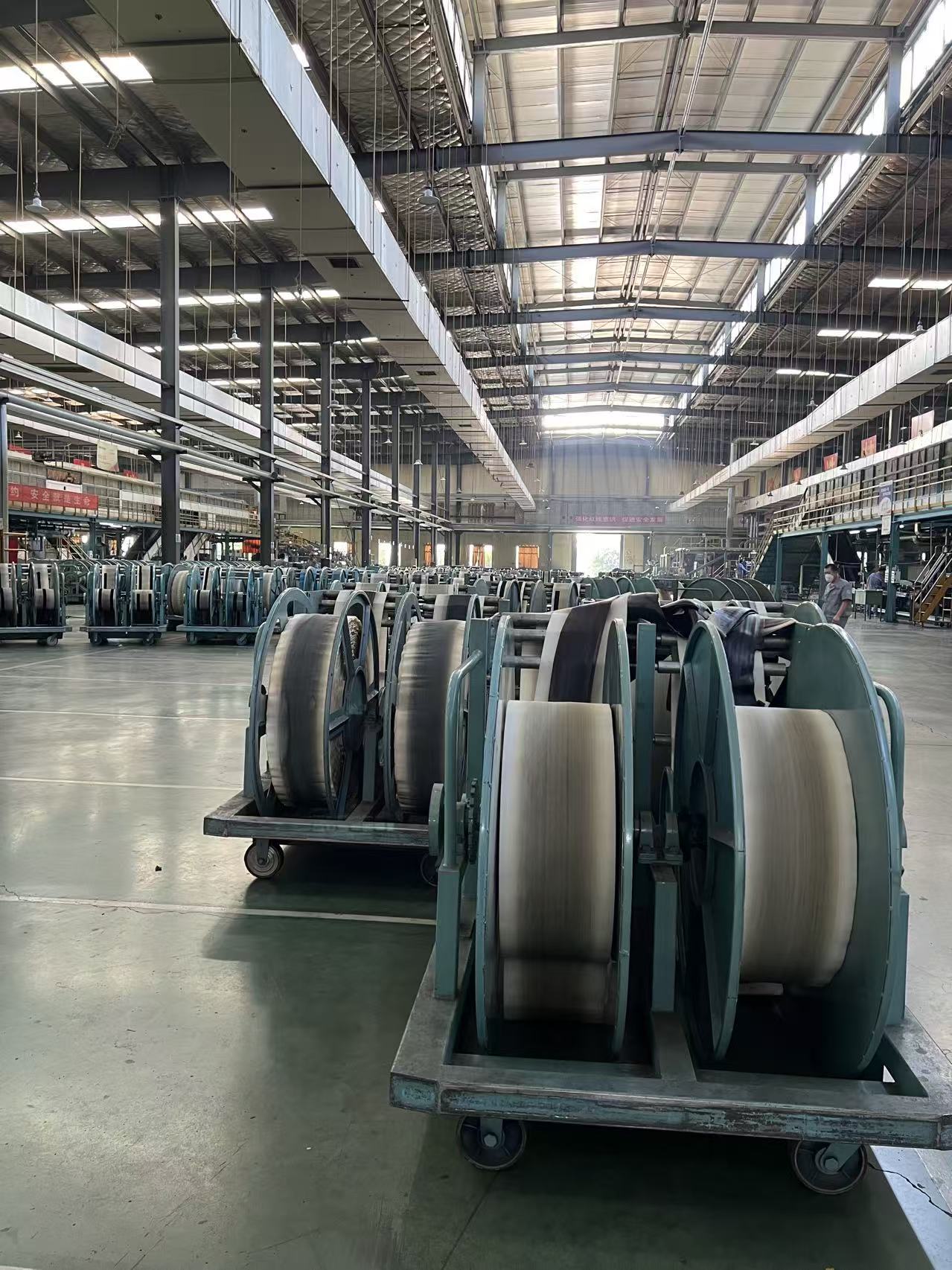
Rubber compound staging. Natural rubber, synthetic rubber, carbon black and precipitated silica are the documented inputs behind tread and sidewall performance.
- Natural rubber — contributes elasticity, tear resistance and low heat build-up, which matter for both grip and casing durability.
- Synthetic rubber — used alongside natural rubber to tune abrasion resistance and wet grip consistency across production batches.
- Carbon black — the primary reinforcing filler; it raises tread wear resistance and helps protect the compound from UV and ozone ageing.
- Precipitated silica — used to balance rolling resistance against wet grip, the two parameters that regulations such as UN Regulation No. 117 (ECE R117) limit for passenger car tires sold in the EU, alongside external rolling noise.
- Steel cord — forms the belt package and reinforces the casing, and is the material that carries load and resists penetration.
- Polyester and nylon cord fabric — used in the carcass for dimensional stability and heat resistance.
The commercial reason this list matters is simple. When a fleet or repair chain asks why one tire lasts longer than another, the answer has to be specific. A documented material list, together with a stated quality-control standard, is what keeps that answer repeatable across years instead of depending on whoever happens to answer the phone.
Construction Differences and What They Change
The design features behind this construction are tougher sidewall rubber, thicker and extended shoulder rubber, an advanced deflection design and a silent absorber element. The manufacturer has published a comparison of that design against traditional tire pattern and construction design. The figures below are the manufacturer's stated comparison; they describe design differences for that comparison rather than a performance guarantee in every market.
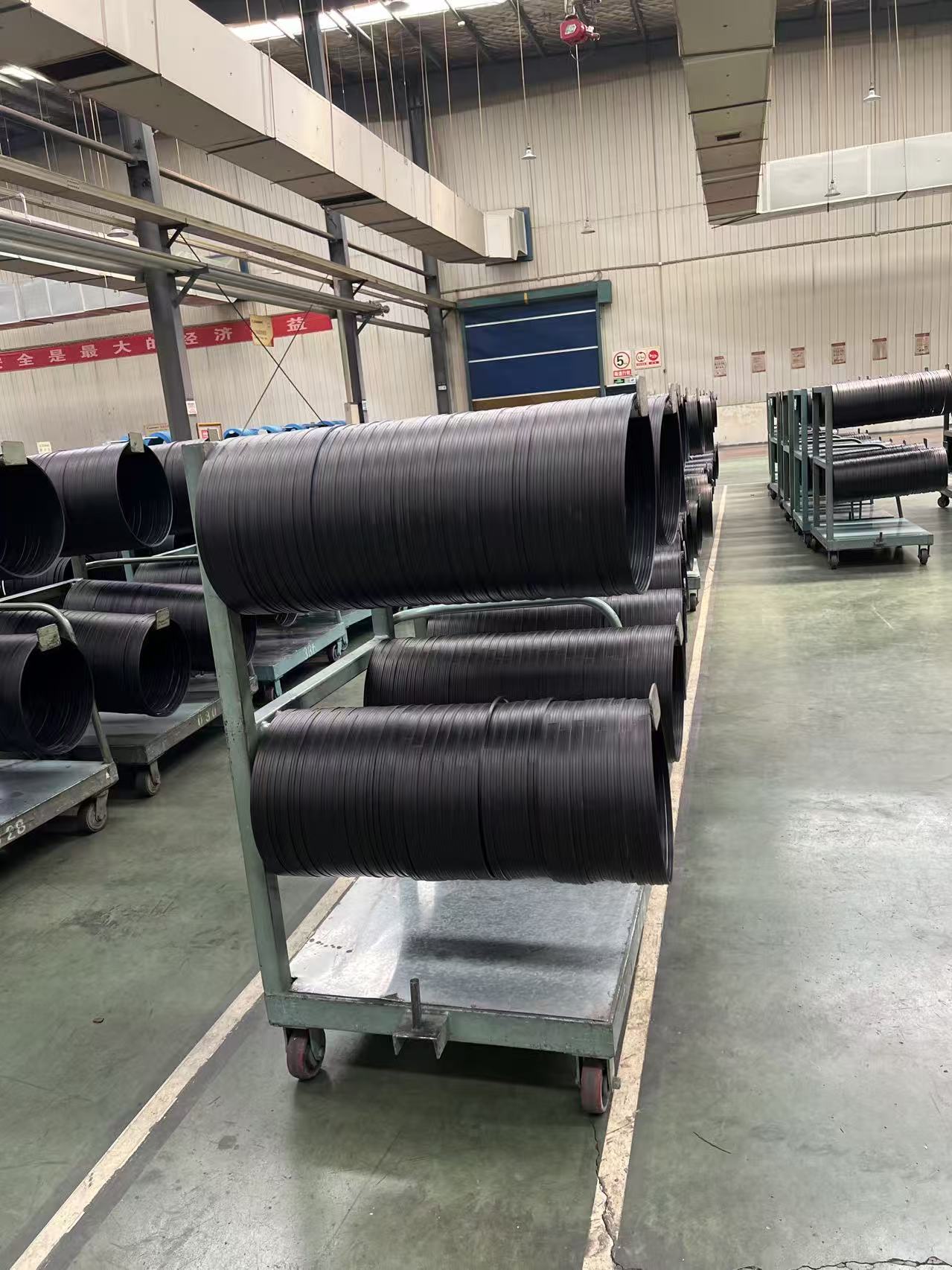
Sidewall and belt reinforcement. A thicker sidewall and an extended shoulder are the construction features a distributor can point to when a fleet asks about pothole damage.
| Parameter | Stated comparison vs traditional tire pattern and construction design |
|---|---|
| Tread contact patch | About 3% wider, for enhanced road contact |
| Sidewall reinforcement | About 5 mm thicker, for impact and blowout resistance |
| Grip and driving stability | About 22% higher |
| Tire lifespan and safety margins | About 40% extended |
| Maintenance required | About 90% less |
| Initial cost | About 10% higher |
| Total cost of ownership | About 40% lower over three years |
| Tread efficiency | Longer tread life |
Read the table as a trade rather than a slogan: a higher initial cost against a lower cost of ownership over three years, achieved through tread life and reduced maintenance. For a distributor selling to fleets that track cost per kilometre, that framing is the one that closes orders. For a distributor selling to price-sensitive retail buyers, the same table is a reason to segment the range instead of discounting it.
Sidewall Durability: The Failure Mode That Decides Reorder Rates
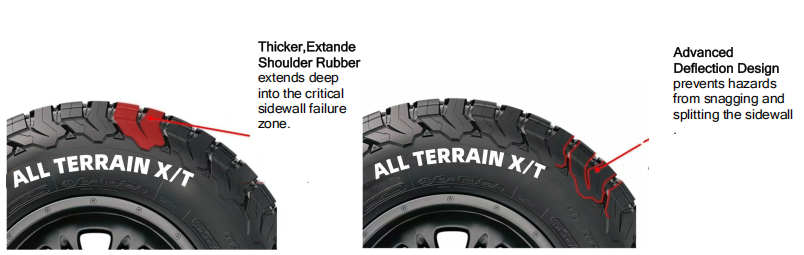
Sidewall risk control. The 5 mm thicker sidewall is aimed at the most common field failure in urban delivery work.
One of the most common field failures in urban delivery and pothole-heavy markets is the sidewall knot — a bulge that forms when the carcass cord is broken by an impact. The control method applied here is a 5 mm thicker sidewall, which significantly reduces the risk of sidewall bulging caused by cord breakage when hitting potholes, supported by quality testing and customer usage training.
Those conditions are why the construction is positioned for urban road, highway, all-terrain, mud-terrain, rugged road, and snow and ice conditions. A distributor should not read that as immunity to impact damage. It is a design margin against the most common cause of premature removal in city work — which, over a multi-year program, is the difference between a size that keeps selling and a size that generates claims.
Distributor Question 4: What Does After-Sales Support Actually Include?
What does after-sales support cover in a long-term passenger car tire partnership?
Three things that can be verified: documented quality control, application guidance for the sizes and categories being sold, and a defined communication path. The program includes after-sales tire quality warranty support and custom promotional accessories, and quality control follows 100% test standards for all products.
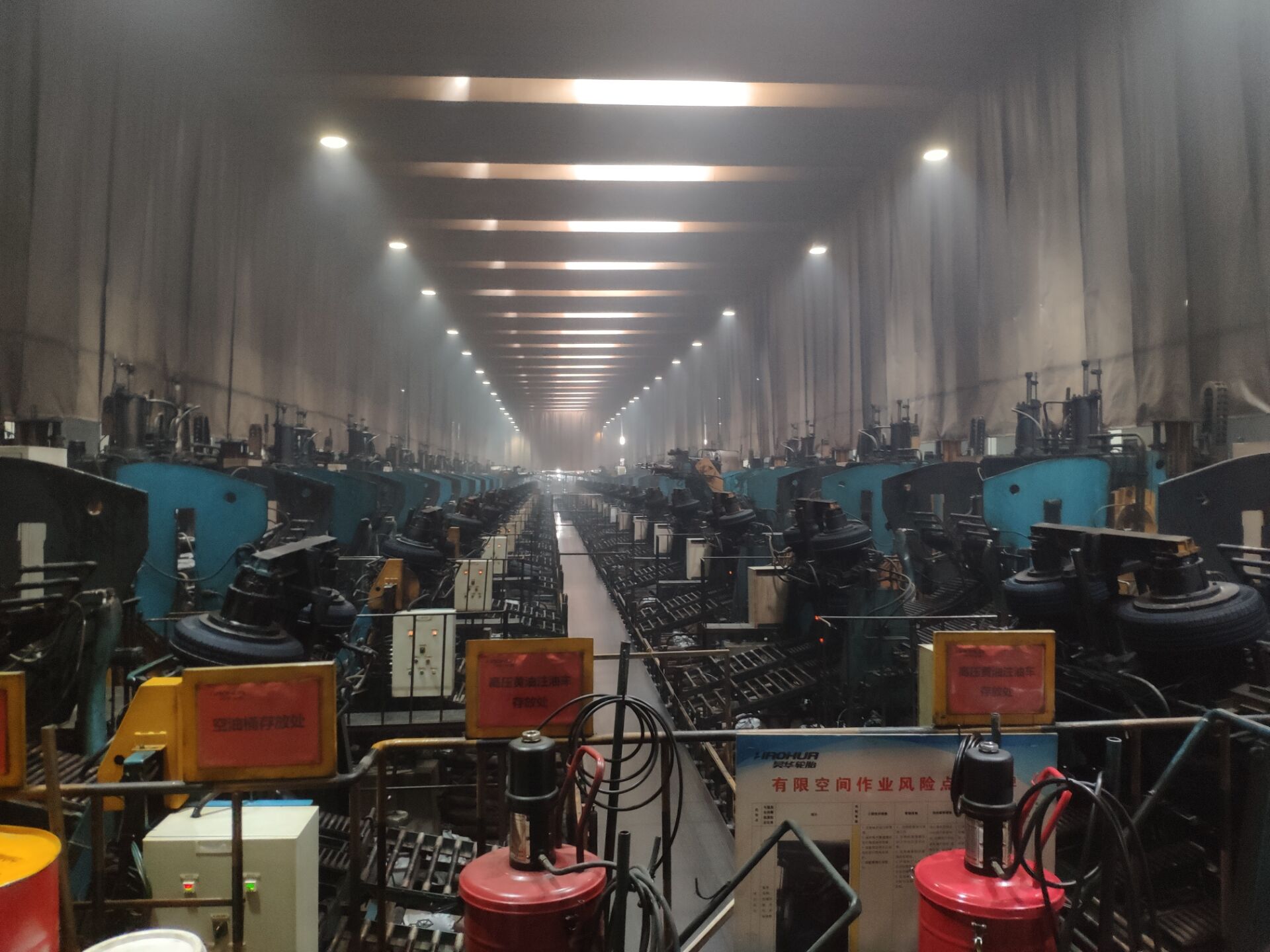
Vulcanization under a 100% test quality-control standard. Documented testing is what makes an acceptance conversation possible before shipment, not after.
After-sales in this category is judged less by promises than by how quickly a distributor gets a usable answer. Quality control follows 100% test standards for all products, and the practical value of that standard is that acceptance has a baseline: pre-shipment testing and, where agreed, third-party inspection through BV can be written into the order rather than negotiated once a problem has already reached a customer.
Warranty support should be treated as a document request. The program includes after-sales tire quality warranty support, but the applicable scope depends on the market and the product line, so distributors should ask for the terms that apply to their market in writing — before volume is committed, not after. A supplier that is comfortable putting support terms in writing is a different risk profile from one that answers only in conversation.
Application guidance is the second layer, and it is the one that prevents most claims. Matching load index and speed rating to the vehicles a distributor's customers actually drive, advising on the choice between all-season and winter and snow products, and setting expectations on rotation and inflation all sit here, alongside the customer usage training that forms part of the manufacturer's quality measures.
The third layer is communication. In practice that means a named contact, written answers to specification and quality questions, and a predictable escalation path. Custom promotional accessories — the point-of-sale materials that support a distributor's own market — belong to the same layer, because they help the distributor sell the program locally instead of simply holding inventory.
Distributor Question 5: How Should the First 12 Months Be Structured?
What is the execution sequence from evaluation to a repeatable supply program?
Eight steps, in this order. The commercial and production figures below are the terms used for this program: minimum order quantity of one 20-foot container (approximately 400–700 pieces), FOB Qingdao, typical production lead time of 25–45 days, monthly production capacity of 60,000 pieces, and quality control following 100% test standards.
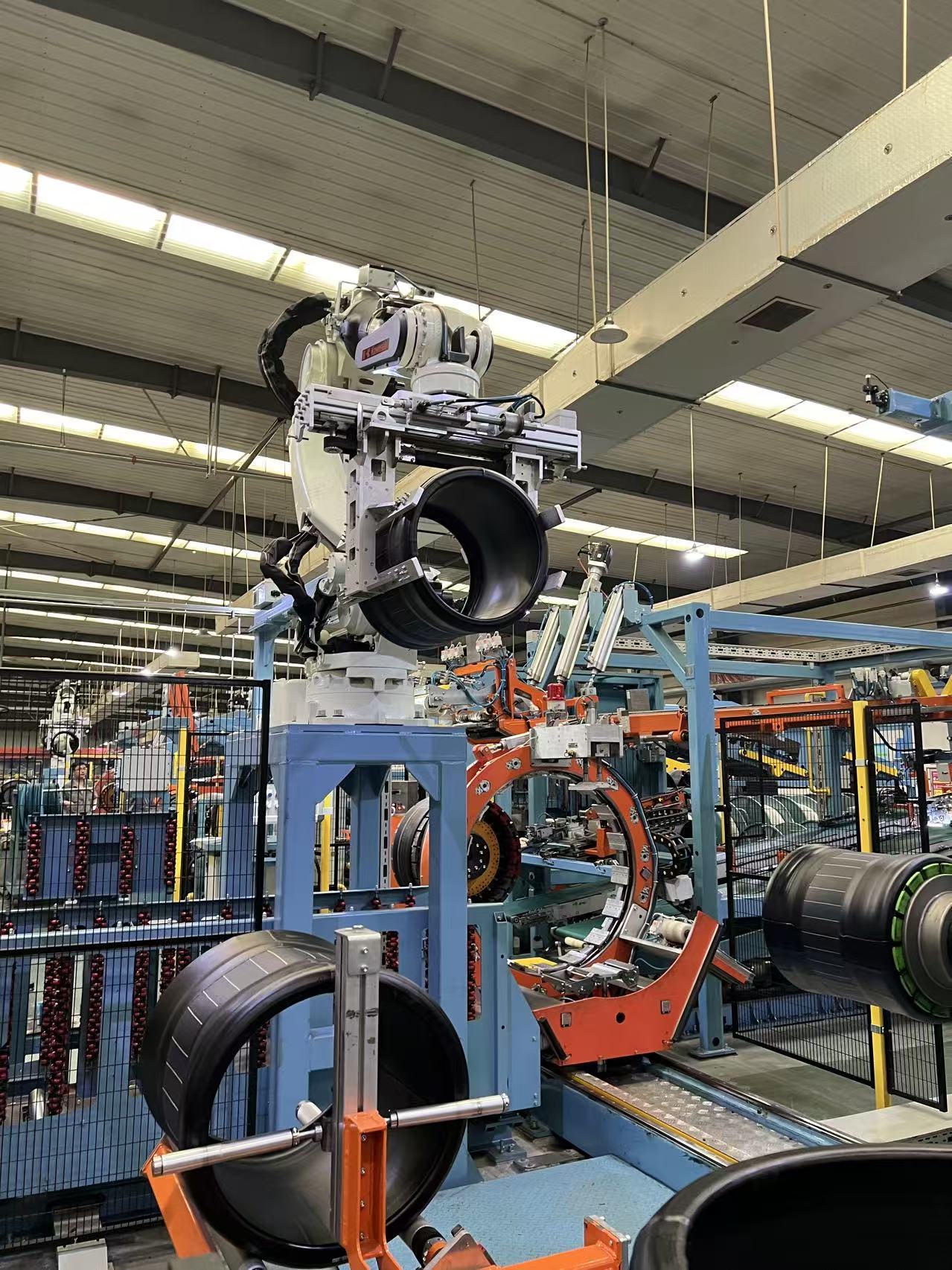
Tire molding. Production planning against a 25–45 day lead time and a 60,000 piece monthly capacity is what turns an order into a schedule.
- Map the local car parc to sizes and categories. Start from the vehicles your customers actually service: delivery vans, taxis, family cars, performance models, and the seasonal split in your region.
- Request the specification sheet for every size under consideration. Check section width, load index, speed rating and maximum pressure against that mapping before anything is ordered.
- Confirm commercial terms. Minimum order quantity is one 20-foot container (approximately 400–700 pieces), delivery terms are FOB Qingdao, and payment terms are 30% T/T as deposit with 70% T/T against copy of B/L.
- Agree acceptance criteria in advance. Pre-shipment test and third-party inspection (BV) should be written into the order, not raised after arrival.
- Place the first order against your selling season. Typical production lead time is 25–45 days, so the first container should be scheduled against demand rather than against the cash cycle.
- Build the reorder calendar around capacity. Monthly production capacity is 60,000 pieces — the figure that determines whether a strong quarter can be resupplied without a gap.
- Front-load seasonal categories. Winter and snow, and all-season, volumes should be committed ahead of the season rather than in the middle of it.
- Review after the first full cycle. Compare sell-through by size, claim patterns and reorder timing, then adjust the size mix for year two. This is the step that turns a transaction into a program.
Use Cases: Which Category Serves Which Channel?
Most distributor questions about the right tire are really questions about which channel the tire is being sold into. The categories below are the ones that come up in program discussions, and each is matched to the demand it actually serves.
- Urban road and high-mileage distribution. Wear resistance and a stable contact patch matter more than maximum speed capability. This is the volume heart of most distributor ranges and the category where tread life drives repeat purchase.
- Commercial van and urban delivery. Sizes such as 155R12C and 5.00R12 ULT, with higher load indexes and maximum pressure markings toward the top of the 300–475 kPa band, are built for stop-start delivery work rather than for comfort.
- Highway and long-distance driving. Heat resistance and uniformity dominate here, because sustained speed raises casing temperature and amplifies any imbalance in the tire.
- Mountain road and all-terrain use. Extended shoulder rubber and a thicker sidewall are the relevant design features when roads are broken, cambered or unsealed.
- Winter and snow. Compound behaviour at low temperature and grip on compacted snow decide whether this category sells on performance or on price alone.
- All-season. A compromise category that is most requested in markets where seasonal changeover is impractical or where buyers want one tire to cover the year.
- Ultra-high-performance. Sizes such as 235/55ZR19, where the buyer is paying for high-speed capability, steering stability and appearance rather than for tread life.
- White sidewall and white letter. Styling-led demand from classic vehicle owners and off-road buyers, supported by the program's white sidewall and white letter tire products.
- EV and low-noise requirements. The fastest-growing technical demand, driven by noise reduction and higher load capacity; it changes what a distributor needs to ask about rolling noise and load index.
- Budget-focused, durability-first buyers. Here the cost conversation should be framed on total cost of ownership, which is where the published 40% lower three-year cost figure becomes a selling argument rather than a specification.
Commercial Terms at a Glance
| Item | Terms |
|---|---|
| Minimum order quantity | One 20-foot container (approximately 400–700 pieces) |
| Delivery terms | FOB Qingdao |
| Acceptance criteria | Pre-shipment test; third-party inspection (BV) |
| Payment terms | 30% T/T as deposit; 70% T/T against copy of B/L |
| Production lead time | 25–45 days, typical |
| Monthly production capacity | 60,000 pieces |
| Quality control | 100% test standards |
| After-sales | Tire quality warranty support; custom promotional accessories |
Frequently Asked Questions
What compliance and labelling rules apply to passenger car tires in my market?
Inside the EU, passenger car tires must comply with UN Regulation No. 117 (ECE R117), which sets limits for rolling resistance, wet grip and external rolling noise, and requires labelling. Requirements differ by market outside the EU. Because compliance is size- and market-specific, a distributor should request the applicable documentation and marking details for each size before it goes into a catalogue, a tender or a shipment plan.
What production capacity and lead time can a distributor plan around?
Monthly production capacity for this program is 60,000 pieces, and typical production lead time is 25–45 days. Quality control follows 100% test standards for all products. Manufacturing takes place in a 1,000,000 sqm facility with a 5,000-person workforce and a 25-person product R&D team, and roughly 70% of output is exported, so planning cycles are built around container-level orders rather than single-piece supply.
What are the commercial terms and the underlying cost structure?
Minimum order quantity is one 20-foot container (approximately 400–700 pieces), delivery terms are FOB Qingdao, acceptance criteria are pre-shipment test and third-party inspection (BV), and payment terms are 30% T/T as deposit with 70% T/T against copy of B/L. On cost, the manufacturer's published design comparison shows an initial cost about 10% higher than traditional tire pattern and construction design, against a total cost of ownership reported about 40% lower over three years.
How can a distributor validate the product before committing to volume?
Validation happens at two levels. The first is documentation: the specification sheet for each size (section width 184–233 mm, load index 91–106 / 104, speed rating N / R / V / W, maximum pressure 300–475 kPa) and the documented material list covering natural rubber, synthetic rubber, carbon black, precipitated silica, steel cord and polyester or nylon cord fabric. The second is the first container itself: one 20-foot container of approximately 400–700 pieces, accepted against a pre-shipment test and third-party inspection (BV), with application guidance and customer usage training available alongside it.
How should reorder timing be managed across a season?
Work backwards from the season rather than forwards from the order. With a typical production lead time of 25–45 days and a monthly capacity of 60,000 pieces, winter and snow and all-season volumes need to be committed well before demand peaks, and a 45-day buffer should be treated as the working minimum for any size that is moving. A practical starting point is to request the current specification sheet and a container-level quotation for the sizes your market actually services, then schedule year one around two or three planned reorders rather than ad hoc restocking.
Conclusion: What a Distributor Should Take Away
A long-term passenger car tire partnership is not decided by a price list. It is decided by whether five models can carry a stocking plan, whether four specifications can be verified per size, whether the materials and construction behind the tire can be documented, whether after-sales produces written answers, and whether the commercial terms — one 20-foot container minimum, FOB Qingdao, 25–45 day lead time, 60,000 pieces monthly capacity — fit the distributor's own cash and season cycle.
Shandong Wideway Tire Co., Ltd. supplies that program under the WIDEWAY, EVERLAND and V-RICH brands, with OEM services covering passenger car tires, off-road tires, white letter tires and white sidewall tires. Distributors evaluating a multi-year agreement should start with the documents: the specification sheets, the material list and the terms that apply to their market.

Container loading for distributor shipment. The first container is the validation step; the reorder calendar is the partnership.
Request the specification sheet, catalogue or a container-level quotation
Ask for the current passenger car tire specification sheet, the EVERLAND catalog, or a quotation against your size mix and load index requirements.
Download the catalog: EVERLAND CATALOG 2025 (PDF)
Contact: Della — della@widewaytire.com | Tel / WhatsApp: +86 18253208831 | Website: www.widewaytire.com
Have Questions or Need More Details?
Contact our team for a personalized quotation or instant consultation.
Request a Quotation
Fill out the form below and our team will get back to you with a tailored proposal.
WhatsApp Direct Chat
Prefer to chat in real-time? Message us on WhatsApp for instant assistance & quick answers.
- Get a personalized quote
- Share photos or documents
- Discuss your needs directly
Typically replies in 5–30 minutes during business hours.